- English
- French
- German
- Portuguese
- Spanish
- Russian
- Japanese
- Korean
- Arabic
- Greek
- German
- Turkish
- Italian
- Danish
- Romanian
- Indonesian
- Czech
- Afrikaans
- Swedish
- Polish
- Basque
- Catalan
- Esperanto
- Hindi
- Lao
- Albanian
- Amharic
- Armenian
- Azerbaijani
- Belarusian
- Bengali
- Bosnian
- Bulgarian
- Cebuano
- Chichewa
- Corsican
- Croatian
- Dutch
- Estonian
- Filipino
- Finnish
- Frisian
- Galician
- Georgian
- Gujarati
- Haitian
- Hausa
- Hawaiian
- Hebrew
- Hmong
- Hungarian
- Icelandic
- Igbo
- Javanese
- Kannada
- Kazakh
- Khmer
- Kurdish
- Kyrgyz
- Latin
- Latvian
- Lithuanian
- Luxembou..
- Macedonian
- Malagasy
- Malay
- Malayalam
- Maltese
- Maori
- Marathi
- Mongolian
- Burmese
- Nepali
- Norwegian
- Pashto
- Persian
- Punjabi
- Serbian
- Sesotho
- Sinhala
- Slovak
- Slovenian
- Somali
- Samoan
- Scots Gaelic
- Shona
- Sindhi
- Sundanese
- Swahili
- Tajik
- Tamil
- Telugu
- Thai
- Ukrainian
- Urdu
- Uzbek
- Vietnamese
- Welsh
- Xhosa
- Yiddish
- Yoruba
- Zulu
Articulated vs. Straight Boom Lift: Which is best for your next project?
Choosing between straight and curved boom lifts has effects on project timelines, safety, and cost-effectiveness. A 22m straight boom lift is often the best choice for large-scale building and industry repair jobs that need a lot of height and horizontal reach. This flexible boom design gives workers a great working height—up to 24.6 meters—along with great horizontal reach, so they can get to hard-to-reach work areas without having to keep moving the equipment around. When buying teams know what each type of boom lift can do differently, they can make sure that the equipment they buy fits the needs of the project, the area, and their working limitations.
Understanding Boom Lifts: Articulated vs. Straight
Boom lifts are important mobile work tools for people in the building, energy, and industry fields. The main difference between straight and flexible boom lifts is how they are built mechanically and how they can be used.
Articulated Boom Lifts: Flexibility Around Obstacles
The boom arm of an articulated boom lift can bend and move both vertically and horizontally thanks to its many joints, which are often called "knuckles." This design works great in places where workers have to go over and around things like HVAC systems, pipes, building faces, or warehouse racks. Many flexible models have small footprints and zero-tailswing options that make them perfect for crowded job sites in cities or indoor facilities with limited space.
Straight Boom Lifts: Maximum Reach and Stability
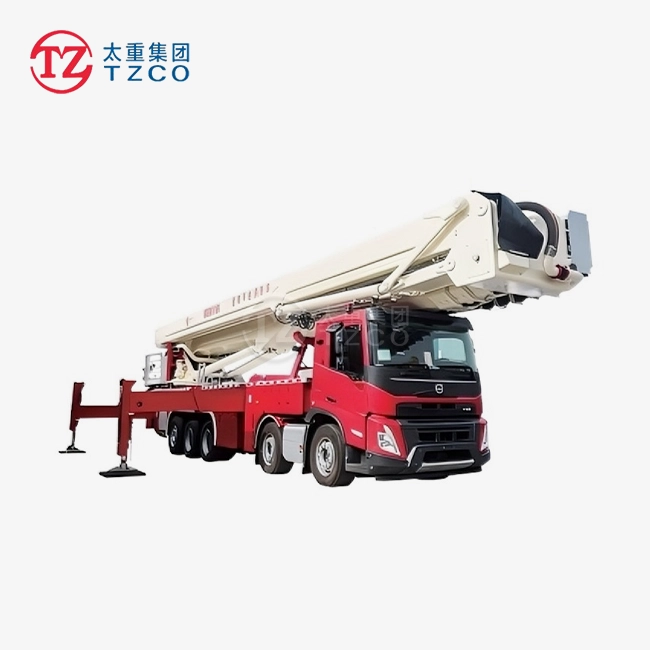
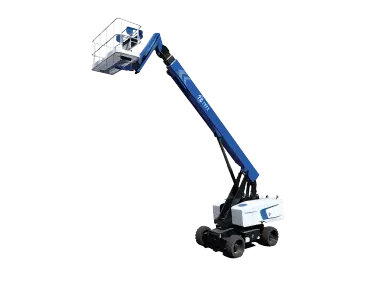
Straight boom lifts, which are also called flexible boom lifts, extend in a straight line. This simple design puts reaching up and down and side to side above navigating around obstacles. The telescopic types are made for open-space uses where getting to high work areas directly is important. The TZCO TZPZ22HEF-L model is a good example of this type. It has a platform height of 22.6 meters and a maximum working height of 24.6 meters. This machine is stable enough for heavy-duty jobs like steel construction, power line repair and dock work, with an overall weight of 12,625 kg and a safe working load of 454 kg.
Key Performance Parameters
When considering these two types of boom lifts, the following factors help with choosing the right equipment:
- Operational Height: Straight boom lifts can usually reach higher maximum heights. For example, 22-meter types can reach work zones that are more than 24 meters high.
- Horizontal Reach: Telescopic designs have better horizontal reach, often reaching 17 to 19 meters. This lets workers place the platform over objects at ground level without having to move the base unit.
- Weight Capacity: Straight booms can usually hold more weight on their platforms, so they can hold more people and heavy goods or tools.
- Manoeuvrability: Articulated lifts are more flexible in tight spaces, while straight booms need more room for workers to move around, but they can place themselves faster in open areas.
Knowing about these changes in design helps buying teams match the skills of tools to the needs and conditions of a given project.
Criteria to Choose the Right Boom Lift for Your Project
To choose the right 22m straight boom lift, you have to look at a number of project-specific factors that affect how well the equipment works, how safe it is, and how much money you make.
Project Scope and Environment
The right tools for the job depends on how the area is set up. When working inside, where there are low ceilings and narrow hallways, small flexible types that are often electric-powered to cut down on pollution are best. Straight boom lifts are useful for outdoor building sites with rough terrain, like those working on bridges, power plants, or open-pit mines, because they can reach farther and go over rough ground. With 4WD and two-wheel handling, the TZPZ22HEF-L can reliably move over uneven ground and other difficult terrain conditions that are popular in energy and public building projects.
Reach and Load Requirements
It is very important to figure out the exact height and horizontal distance needed to get to work areas. Straight boom lifts, like the TZPZ22HEF-L, have a horizontal reach of about 17 to 19 meters, which lets them go over holes, pipes, or base barriers without having to move. The 454 kg safe working load can hold two people plus tools, which is important for jobs that need air equipment, welding equipment, or moving things at a high level.
Power Source Considerations
Diesel-powered models have the high torque and long range needed for tough outdoor jobs, while electric models are better for cities and indoor buildings because they make less noise and pollution. The 83.2V/375Ah battery system in the TZPZ22HEF-L strikes a good balance between power output and energy economy. Load-sensitive hydraulic controls reduce the amount of fuel used without slowing down operations. This has a direct effect on project costs and environmental compliance.
Cost Analysis and Ownership Models
Teams in charge of buying things have to look at the total cost of ownership, which includes the costs of buying, maintaining, and running the thing. Because their hydraulic systems are easier and they don't have as many turning points, straight boom lifts usually need less upkeep than flexible types. Leasing and renting give you choices for short-term jobs, while buying fully is best for workers who need to meet high-reach needs all the time. Looking at how much equipment is used, how much it costs to fix when it breaks, and how much it's worth when it's time to sell are all parts of figuring out estimated ROI.
Safety Standards and Certifications
Following the rules set by ANSI/SAIA A92.20 in North America and EN280 in Europe protects the safety and stability of structures. Load-sensing systems, tilt alarms, emergency lowering mechanisms, and operator presence monitors are some of the most important safety features. TZCO's production processes meet strict international quality standards. They have over 70 years of experience with heavy machinery and keep their licenses up to date through quality improvement and testing programs that run all the time.
22m Straight Boom Lift in Focus: Advantages and Use Cases
In the 22-meter class, straight boom lift offer clear operating benefits that directly address the problems builders, mine operators, and site managers in a wide range of businesses face.
Core Advantages of Telescopic Boom Design
Straight boom lifts are built with safety, ease, and efficiency in mind. The best things about flexible overhead work platforms like the TZPZ22HEF-L are these:
- Better Horizontal Reach: The single-arm flexible design can reach farther horizontally than joint models of the same height, so you don't have to move the base unit when working over objects or in tight spaces on the ground.
- Better Platform Stability: Straight lifts have a rigid boom structure and fewer moving joints, so the platform doesn't move around as much when doing precise work like putting glass panels or connecting structural steel.
- Operation and maintenance are easier because there are fewer hydraulic pivot points. This means that operators don't have to learn as much, and seals and joints don't have to be inspected as often.
- Energy-Efficient Hydraulic Systems: The TZPZ22HEF-L's load-sensitive control systems provide accurate and quick reactions while saving energy during long work shifts.
- Strong Off-Road Performance: Full-time moving wheels and 4WD systems improve off-road performance, making it safer to drive on muddy docks, building sites, and mine operations.
All of these benefits cut down on project timelines and running costs, especially when it comes to maintaining large-scale structures and factories.
Ideal Industries and Applications
Telescopic boom lifts are very useful in many fields where height, reach, and load capacity all come together. These tools are used by construction companies to finish the outside of high-rise buildings, put up facades, and assemble structural steel. When compared to flexible options, the ability to stretch straight upward and outward speeds up placement, especially on open sites with few overhead obstacles.
Straight boom lifts are used in mining and tunnelling to maintain equipment like crushers, conveyors, and processing towers. Models like the TZPZ22HEF-L can handle the rough, dusty conditions of open-pit mines thanks to their tough build and high ground clearance. Energy sector jobs, like maintaining wind turbines, inspecting gearbox lines and turning around refineries, gain from the long reach needed to get to high parts without putting up scaffolds.
Straight boom lifts are used in shipyards and ports to paint the hull, weld and check the structure. With heavy tools, workers can position themselves next to ship superstructures or container handling equipment thanks to the horizontal reach and high platform capacity. These lifts are used as part of the repair plans for overhead cranes, production line equipment and warehouse lighting systems in steel mills and cement factories, among other places.
Maintenance Best Practices
Systematic repair practices for the 22m straight boom lift must be followed to keep tools working well and lasting a long time. Daily checks before use should make sure that the hydraulic fluid level, battery charge, tyre state and safety system functions are all correct. The TZPZ22HEF-L has a 180-liter hydraulic oil tank that lets it work for longer periods of time. However, regular fluid analysis finds contamination before it damages parts.
As part of regular maintenance, the pivot points are oiled, the load-sensing monitors are checked, and the emergency fall systems are tested. To keep the engine running well, operators should keep an eye on the DPF recycling processes and make sure the DEF levels are right. Universal device support cuts down on the need to keep extra parts on hand, and getting parts from approved makers makes sure that they will work with everything. Building partnerships with providers that offer full after-sales support, such as expert training, on-site service, and quick parts delivery, cuts down on unplanned downtime and saves equipment investments.
Comparative Analysis: Articulated vs. Straight Boom Lifts
Comparisons that are based on facts and data that show differences in performance across key business factors help with purchasing choices.
Top Five Decision Factors
Figuring out how curved and straight boom lifts do on a number of important factors makes it easier to choose the right tools for a given project:
- Reach and Access Flexibility: Articulated lifts are great at getting around objects because their arms have multiple joints, which makes them good for crowded places. Straight boom lifts are great for open places where you need to position things from a long way away because they maximise both horizontal reach and vertical height. The TZPZ22HEF-L has a working height of 24.6 meters and a large horizontal extension, which makes it longer in a straight line than flexible models.
- Terrain Adaptability: Both types of boom lifts have rough-terrain versions, but straight booms usually have bigger counterweights and wider axle spacing to make them more stable on uneven ground. With its 4WD system and moving axle design, the TZPZ22HEF-L can be used safely on building sites with uneven ground and surfaces.
- Operational Capacity: Because the boom is stable, straight boom lifts can usually handle bigger platform loads. The TZPZ22HEF-L can hold up to 454 kg, which is enough for two workers, tools, and materials. This cuts down on the number of trips needed to finish jobs at height. Most articulated types can only carry a certain amount of weight, which limits how much they can carry.
- Fuel and Environmental Impact: For indoor use, electric articulating lifts produce the least amount of pollution, while diesel straight booms provide the power and energy needed for industry tasks that need to be done outside. Performance and fuel economy are balanced by hybrid systems and energy-efficient hydraulic controls, like those in the TZPZ22HEF-L. This lowers operating costs and the damage to the environment.
- Cost-effectiveness: Because their motor systems are easier, straight boom lifts usually need less upkeep, which means they cost less to own in the long run. If you buy an articulated lift, it may cost more at first and need more maintenance because it has more pivot parts. By looking at the total cost of ownership over five to ten years, you can see which choice gives you the best financial results for your business.
A Look at Performance Comparisons
Performance trade-offs can be seen by comparing different types. A standard 22m straight boom lift, like the TZPZ22HEF-L, has a working height of 24.6 meters, a horizontal reach of about 19 meters, and a platform that can hold 454 kg. In the same height range, articulated models can usually reach working heights of around 21 to 23 meters. However, their horizontal reach is usually limited to 12 to 14 meters, so they can only move up and over. Weight limits for flexible designs are usually between 227 and 340 kg, which makes it hard to do jobs with more than one user.
In both groups of 22m straight boom lift, you can choose from gasoline, electric, and combination fuel types. Diesel models are best for heavy-duty jobs outside, while electric models work better indoors or in places with noise restrictions. Because they are easier to maintain and have shorter downtimes, straight boom types are more popular.
Real-World Application Scenarios
Case studies show how the differences work in real life. As part of a project to fix up a highway bridge, workers had to climb up 22 meters to reach girders that were 18 meters above the bridge deck. A straight boom lift set up on the road made it easy to get to the work area and quickly do checks and fixes. With a flexible lift, it would have been hard to get the horizontal reach that was needed without having to move around a lot, which would have slowed down the project timeline.
On the other hand, a factory had to repair HVAC equipment that was placed on upper floors and was surrounded by production equipment. An flexible boom lift was able to get through tight spaces and around overhead lines, putting the platform right on top of the machinery. A straight boom would have needed a lot of space and would have had a hard time getting to the small work area.
These examples show how important it is to match the features of a boom lift to the entry problems, terrain conditions, and operating limits of a particular project.
Procurement Insights: How to Source the Best 22m Straight Boom Lift for Your Business?
To find the right overhead work platform, you need to know about customer types, evaluate makers, and figure out how to go about buying things so that you get reliable, low-cost tools.
Identifying Your Buyer Profile
Many types of buyers put different factors at the top of their lists. When general contractors work on big building projects, they make sure that the equipment is reliable and that they can get replacement parts quickly so that there isn't any costly downtime. To make the most money from their fleets, rental businesses focus on things like starting prices, reselling value, and low upkeep needs. OEM wholesalers look for makers whose products have stable quality, lots of detailed information, and strong guarantee plans to help them build relationships with customers.
When choosing a provider and negotiating a contract, you should think about your business goals, such as stability, cost control, and technical performance. Contractors who are in charge of long-term projects might want to buy the tools outright, while contractors whose project schedules change often would benefit from borrowing.
Evaluating Manufacturers and Suppliers
TZCO is China's first company to make big machinery like the 22m straight boom lift. It was founded in 1950 and has over 70 years of engineering experience. The company has sent more than 40,000 pieces of equipment, weighing a total of 10 million tonnes, to projects in more than 70 countries. With the help of one National Key Laboratory and several innovation platforms, TZCO is always making overhead work platform technology better by using smart manufacturing methods and strict quality controls.
Check for certificates that show suppliers meet foreign quality and safety standards when you are reviewing them. Look at how reliable a manufacturer's products are, how quickly they respond to customer service requests, and how innovative their technology is. Two national-level "Intelligent Manufacturing Demonstration Factories" and TZCO's intelligent manufacturing facilities make sure that product quality stays the same and production cycles are sped up.
Purchasing, Leasing, and Rental Considerations
The type of ownership affects cash flow, taxes, and the ability to change how things are run. For companies with long-term high-reach needs, buying tools directly gives them long-term control over their assets and the chance to get tax breaks for depreciation. Leasing reduces the amount of money that needs to be spent on capital up front and gives businesses the chance to improve at the end of the lease, which fits with their goal of having regular monthly costs. Rental choices give short-term projects the most freedom by getting rid of the need for upkeep and letting tools be scaled up or down depending on the needs of the project.
When you look at the total cost of ownership over five and ten years, you can see which type is better from a financial point of view. Pay attention to the costs of finance, upkeep, insurance, and the expected resale value when evaluating your choices.
Logistics and Supply Chain Management
When you buy something internationally, you have to coordinate shipping, clearing taxes, and local delivery. TZCO's experienced logistics team works with reliable partners to offer safe packing and quick shipping around the world, cutting down on delivery times and keeping equipment safe while in transit. Knowing about import taxes, government rules, and the paperwork needed can help you avoid delays and extra costs.
Setting up reliable extra parts routes makes sure that parts can be replaced quickly when they need to be. Universal support for accessories and complete parts catalogues make stocking simpler. To protect the performance of equipment and increase its lifespan, you should negotiate service agreements that cover things like preventative maintenance, emergency fixes, and training for operators.
Conclusion
Whether to use a flexible or 22m straight boom lift depends on the needs of the project, the geography, and the goals of the operations. Straight boom lifts work best in open spaces that need the most height and horizontal reach. They are also very stable and can carry a lot of weight, making them perfect for heavy-duty industrial uses. Articulated models are flexible in small areas where getting around obstacles is very important. By looking at performance factors, comparing costs, and only buying from authorised makers, you can be sure that your equipment investments are in line with your business goals, improve project efficiency, and support long-term operating success.
FAQ
What should I look for in a 22m straight boom lift in terms of safety?
Important safety features include load-sensing systems that stop overflowing, tilt alarms that go off before dangerous angles, emergency descent mechanisms that let the platform go down safely when the power goes out, and operator presence sensors that turn off the controls if the user leaves the platform. When conditions go beyond the safe working limits, which are usually 12.5 m/s, wind speed monitors sound an alarm. Following the rules set by ANSI/SAIA A92.20 and EN280 guarantees the safety and stability of the structure. Safety systems stay safe for workers and follow the rules when they are inspected and maintained on a regular basis.
How do straight and curved boom lifts compare in terms of how much fuel they use?
Because their hydraulic systems are easier and have fewer moving parts, straight boom lifts usually use less fuel when they're working for a long time. Control systems that are sensitive to load, like the ones in the TZPZ22HEF-L, make sure that the hydraulic flow is just right based on demand. This saves energy. When articulated models do complicated manoeuvres, they use more fuel because they need more hydraulic power to move more than one pivot point. Electric versions of both types don't use any fuel, but they give up some runtime and power in exchange for no pollution and less noise.
What kinds of leases are there for projects that only last a short time?
Lessors of equipment offer a range of flexible terms, from daily rates to loans that last for several years. Rentals for a few days to a few weeks are good for jobs that need to be done quickly and don't require a lot of money up front. Monthly rents are good for projects that last for more than one month, and they usually have lower daily rates than short-term renting. Lease-to-own agreements let companies put loan payments toward a future purchase. This is a good option for workers who want to try out tools before deciding to buy it. Reviewing the terms that cover who is responsible for upkeep, whether insurance is needed, and early termination fees helps make sure that the project's schedule and budget are met.
Partner with a Trusted 22m Straight Boom Lift Supplier
Every overhead work platform that TZCO makes is based on our more than 70 years of experience making high-quality heavy machinery. Our TZPZ22HEF-L straight boom lift has the reach, steadiness, and low energy use that your mining, building, energy, and industry projects need. As China's first company to develop its own heavy machinery, we offer world-class clever production along with full after-sales support, including expert training and fast delivery of spare parts. This makes sure that your equipment purchases give you the best return on investment (ROI).
Are you ready to improve your job skills? For personalised advice, full product details, and fair prices on our 22m straight boom lift models, please email our team at tzcoglobal@tz.com.cn. Visit tzcoglobal.com to look through our wide range of products and find flexible financing and rental options that will help you make the most of your working budget. Our dedication to customer success and track record in over 70 countries will help your next project move forward.
References
American National Standards Institute. (2018). ANSI/SAIA A92.20: Design, Calculations, Safety Requirements and Test Methods for Mobile Elevating Work Platforms.
European Committee for Standardization. (2013). EN280:2013+A1:2015 - Mobile Elevating Work Platforms - Design Calculations - Stability Criteria - Construction - Safety - Examinations and Tests.
Occupational Safety and Health Administration. (2020). Aerial Lifts Safety Guidelines for Construction Industry Applications. U.S. Department of Labor.
International Organization for Standardization. (2019). ISO 16368:2019 - Mobile Elevating Work Platforms - Design, Calculations, Safety Requirements and Test Methods.
Construction Industry Research and Information Association. (2021). Best Practice Guide to Selecting and Operating Mobile Elevating Work Platforms in Heavy Construction.
Heavy Equipment Manufacturing Association. (2022). Comparative Performance Analysis of Telescopic and Articulating Boom Lifts in Industrial Applications. Industry Technical Report Series.