- English
- French
- German
- Portuguese
- Spanish
- Russian
- Japanese
- Korean
- Arabic
- Greek
- German
- Turkish
- Italian
- Danish
- Romanian
- Indonesian
- Czech
- Afrikaans
- Swedish
- Polish
- Basque
- Catalan
- Esperanto
- Hindi
- Lao
- Albanian
- Amharic
- Armenian
- Azerbaijani
- Belarusian
- Bengali
- Bosnian
- Bulgarian
- Cebuano
- Chichewa
- Corsican
- Croatian
- Dutch
- Estonian
- Filipino
- Finnish
- Frisian
- Galician
- Georgian
- Gujarati
- Haitian
- Hausa
- Hawaiian
- Hebrew
- Hmong
- Hungarian
- Icelandic
- Igbo
- Javanese
- Kannada
- Kazakh
- Khmer
- Kurdish
- Kyrgyz
- Latin
- Latvian
- Lithuanian
- Luxembou..
- Macedonian
- Malagasy
- Malay
- Malayalam
- Maltese
- Maori
- Marathi
- Mongolian
- Burmese
- Nepali
- Norwegian
- Pashto
- Persian
- Punjabi
- Serbian
- Sesotho
- Sinhala
- Slovak
- Slovenian
- Somali
- Samoan
- Scots Gaelic
- Shona
- Sindhi
- Sundanese
- Swahili
- Tajik
- Tamil
- Telugu
- Thai
- Ukrainian
- Urdu
- Uzbek
- Vietnamese
- Welsh
- Xhosa
- Yiddish
- Yoruba
- Zulu
Types, Uses and Benefits of Scissor Lifts
When business needs safe and quick entry to high work areas, the 6m scissor lift comes into play as a useful option. These overhead work platforms can reach up to 8 meters above the ground while still being stable, having a small size, and being easy to use. These lifts are made to help construction companies, mines, factories, and logistics hubs with installation, maintenance, and moving things up and down from lower levels. They do this without the risks of ladders or the complexity of scaffolding systems.
Understanding 6m Scissor Lifts: Types and Key Features
Scissor lifts are specialised mobile raising work platforms that use a crossed pantograph device to raise things vertically. This connection can be extended and retracted by a hydraulic or electric drive system. This allows for controlled climbing and descending for people and goods.
Electric Scissor Lifts for Indoor Applications
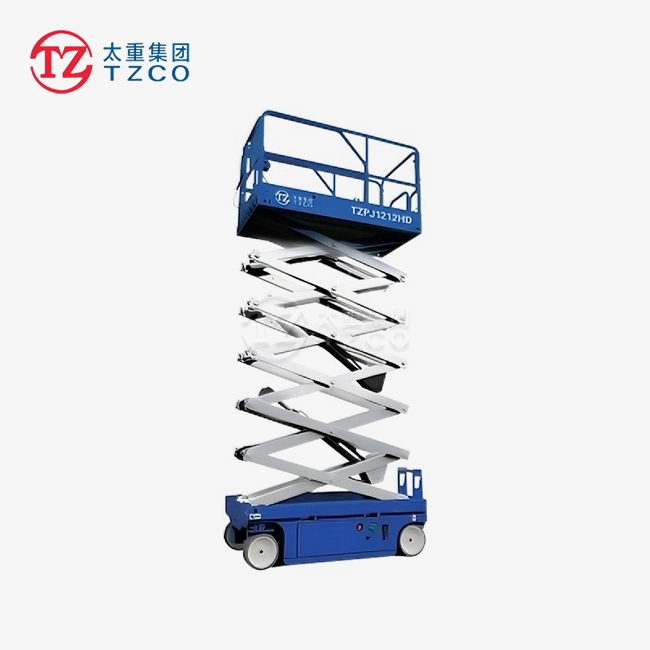
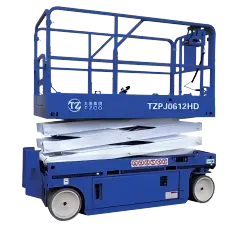
Because they don't produce any pollution and are quieter, electric types are most common indoors. With its 24V/230Ah battery system and two 3.3KW motors that power both motion and lifting, the TZCO TZPJ0612HD is a great example of this type of lift. This set-up lets it work in places where air quality and noise levels are important, like buildings, stores, and factory floors. The 2,300-kilogram machine can lift a platform up to 6 meters high, and each lifting cycle takes 30 to 35 seconds. This shows that it is quick and can handle repeated chores. The small size—2.48 meters long and 1.16 meters wide—makes it easy to move through standard doors and narrow paths that are common in warehouses where things are stored.
Diesel and Hybrid Variants for Outdoor Work
Rough ground and outdoor building sites need diesel-powered options that can run for longer and have better grip. These versions have bigger tires with bold tread patterns, stronger frame parts, and more ground clearance to handle rough areas that come up in mining and civil engineering projects.
Critical Specifications That Drive Selection
Buying things depends on a number of technical factors that make sure the powers of the tools match the needs of the business. Load capacity tells you how much weight the platform can safely hold in people, tools, and things. For example, the TZPJ0612HD says it can hold 300 kg of weight. It depends on the size of the platform how much room it has for work and how much stuff it can hold. How long you can go without charging and how well you can handle hills are directly related to the size and power of the batteries. Safety systems with emergency lowering devices, excess protection, non-slip deck surfaces, and full encircling guardrails with toe boards set the minimum level of safety needed in all workplace settings.
The quality of the hydraulic system affects how well it works and how precisely it positions things. Modern designs, like the ones in the TZPJ0612HD, use 20-liter hydraulic oil tanks with tried-and-true pressure control to keep lifting performance steady during job cycles. Getting lowering times down to 20 to 25 seconds lets people move quickly between work zones, which has a direct effect on output measures.
Common Uses and Applications of 6m Scissor Lifts in Industrial Settings
Because they can handle a modest amount of elevation, these platforms can be used in a wide range of operating situations where bigger equipment isn't possible or where human methods pose too much risk.
Construction and Infrastructure Projects
For ceiling work, hanging light fixtures and putting in wiring, contractors who do building fit-outs, electrical installs and HVAC system rollout depend on 6m scissor lift. The stable platform removes the need to constantly move steps and can hold multiple workers and their tools at the same time. Bridge repair crews use these lifts to get to structural parts that are within reach for inspections and coatings.
Manufacturing and Assembly Operations
Scissor lifts are built into production lines so that quality control and installation points for parts can be located above the lines. These platforms are used to maintain equipment on high conveyors, hoppers, and dust collection systems in steel and cement companies. Being able to place the lift right next to the machinery cuts down on worker tiredness and speeds up repair rounds, which directly helps meet production uptime goals.
Logistics and Warehousing Facilities
Scissor lifts are used in distribution processes to get to goods that can't be reached by regular reach trucks. These platforms are used by workers to count cycles, check labels and get products from high-bay storage systems. The narrow width specs allow operation within hallway widths that don't fit bigger equipment. This increases store density while still allowing access.
Facility Maintenance and Repair
Building management teams in commercial, educational and industrial buildings take care of scissor lifts so that they can do regular tasks like replacing lights, changing HVAC filters, updating signs and fixing the building shell. These units are used by port officials and shipyards to maintain ships, fix equipment for moving containers, and fix up terminal facilities in situations where stable, high work roles are needed.
The constant working height of 8 meters makes these lifts perfect for both one- and two-story buildings. This means that you don't have to worry about oversizing your equipment, which can add to running costs and make site planning more difficult.
Benefits of Using 6m Scissor Lifts for B2B Operations
When businesses invest in scissor lift technology, they get measured benefits in terms of safety, operational efficiency, and lifetime economics that have a direct effect on how they place themselves in the market.
Enhanced Workplace Safety and Compliance
Engineered safety systems on aerial work platforms make it much less likely that someone will fall. With its full-height guardrails, self-closing gates, and non-slip deck surfaces, the contained platform makes for a safer place to work than using a ladder. There are emergency stop buttons at both station level and ground level, so there are two ways to shut down. The emergency lowering system makes sure that people can get out even if the power or hydraulics go out, which is a critical safety feature.
Increasingly, regulations in the industrial, building, and warehouse industries require designed fall safety for work that is done at heights. These needs can be met by scissor lifts, and recording systems help make sure that rules are followed during safety checks and government reviews. By showing they are committed to fall safety procedures, companies lower their risk of workers' compensation claims and their insurance rates.
Operational Efficiency and Productivity Gains
Compared to standard entry ways, this method speeds up task finishing by a large amount. Scaffolding systems can take hours to set up each time, but scissor lifts don't need to be put together. With the TZPJ0612HD features, workers can move from one level of elevation to another in less than 40 seconds, keeping the flow of work going even when working on multiple levels at once. The platform can hold tools, supplies, and multiple people at the same time, which cuts down on trips to get equipment that break up work cycles.
The easy-to-use control systems of the 6m scissor lift mean that operators don't need to be trained as much, and the quick drive mechanisms allow for exact placement. Ground-level and platform-mounted controls give operators a choice of how to work, whether they are watching the lift or actually working at height. All of these things cause fewer hours of work to be put into each job, which has a direct effect on project budgets and delivery times that EPC contractors and system designers who are in charge of complex turnkey implementations care about.
Versatility Across Operational Contexts
The ability to move tools both indoors and outdoors makes the most of its use across project categories. Electric power works well in protected spaces and can also be used outside on properly prepared surfaces. The small size fits easily into both crowded industry areas and wide-open building sites. Because it's flexible, companies don't have to keep separate stocks of tools for each type of job, which helps them make the best use of their money.
Lifecycle Economics and Maintenance Simplicity
Heavy-duty construction with frames made of strengthened steel and tried-and-true hydraulic systems gives the product a longer useful life in harsh industrial settings. The TZPJ0612HD design focuses on service places that are easy to get to and strong parts that make preventive maintenance easier. Simple steps make it possible for maintenance teams to do routine checks, fluid changes, and part verification without any extra help.
Total cost of ownership estimates that financial decision-makers look at closely during the buying process show that less frequent upkeep and lower costs for new parts lead to a favourable total cost of ownership. When equipment lasts for many project cycles, it gives a good return on investment, which makes scissor lifts strategic assets instead of tools that are used up quickly. For businesses that run ports, mines, or factories, this level of dependability means that the facilities will always be available during key production times, when machine breakdowns can have a big effect on profits.
Comparing 6m Scissor Lifts with Other Aerial Work Platforms
Procurement workers should know how scissor lifts compare to other types of lifts so they can choose the best tools for the job.
Scissor Lifts Versus Boom Lifts
Boom lifts have flexible or extending arms that stretch beyond the base area, which lets them reach horizontally. This feature works well for tasks that need to get over hurdles or be placed away from the building. However, different boom designs add complexity by needing more hydraulic circuits, adjustment points, and control systems, which raises the cost of purchase and upkeep. When the boom is extended, its center of gravity rises, which means that bigger stabilisation tracks are needed and there are more risks of overturning, so operators need more training.
Scissor lifts focus on vertical rise with little horizontal shift. This makes them naturally stable because the load line is centred and the center of gravity is low. For easier handling, less training, and simpler upkeep, this means that it is simpler to make. For jobs that need mostly vertical access within the platform area, scissor lifts are the best option because they are cheaper and easier to use.
Electric Versus Diesel Power Considerations
The smoke from electric types isn't released into the air, so they can be used freely inside, even in busy or sensitive areas. The quiet operation works well in places like stores, hospitals, and data centers where noise can get in the way of work. As battery technology improves, operating lengths that are longer than full-shift needs are now possible in many situations. However, planning for charging infrastructure is still needed.
Diesel versions of the 6m scissor lift have longer run times without having to be recharged as often, and they have more power for continued gradeability on outdoor sites. Diesel versions are better in rural mine and building sites where electricity isn't readily available because they can run on diesel fuel. The choice will depend on looking at the working setting, the job cycle needs, and the equipment that is accessible.
Rental Versus Purchase Economics
For short-term needs, project-based organisations often find rental agreements helpful because they avoid having to buy new equipment and make sure they have access to well-kept equipment with service support. Rental companies pay for repairs, storage, and the risk that technology will become outdated.
Direct ownership leads to better economics for businesses that need to keep raising standards across all of their ongoing activities. Renting something for a long time costs more than buying it, and when you own something, you can use it right away without having to worry about schedule issues or rental market supply risks. Facilities that are in charge of maintaining infrastructure, running production lines, or transportation hubs usually prefer control that is backed up by in-house repair skills.
Procurement Guide: How to Choose and Where to Buy 6m Scissor Lifts?
To make sure that the equipment choices make the right impact on the business, strategic buying involves carefully looking at practical needs, provider abilities, and lifecycle support infrastructure.
Defining Operational Requirements
Specifications start with figuring out the correct working height, which includes the necessary reach for jobs that are done above head. The TZPJ0612HD has a 6-meter platform height, which means that the user can reach things at an 8-meter working height. This is good for repair work on two-story buildings and getting to industrial equipment. Load capacity estimates must take into account the people, tools, and objects that are on the stage at the same time, along with safety limits.
The environment determines the choice of power source and the level of security needed. Electric types work best indoors, while parts that can withstand the weather and the right driving systems are needed for outdoor use. Duty cycle analysis tells you whether the equipment is driven by single-shift irregular use or ongoing multi-shift operation. This affects the power capacity and repair gap requirements.
Budget Planning and Total Cost Evaluation
The initial prices of purchase are only one part of a full economic study. Maintenance costs, such as regular service, new parts, and consumables, add up over the life of the purchase. Depending on the local utility rates and fuel prices, charging with electricity and using diesel fuel have very different energy costs. Operating funds include money for things like training for operators, keeping certifications up to date, and insurance fees.
When considering the pros and cons of buying vs. renting a 6m scissor lift, a lifecycle study should look at how the tools will be used over a reasonable amount of time, taking into account the assets' leftover value and the total rental costs. Finance teams can help organisations by modelling the effects on cash flow and the supply of funds.
Engaging Qualified Suppliers and Manufacturers
The success of procurement depends a lot on which suppliers are chosen and what kind of help they offer. Manufacturers that have been around for a long time, like TZCO, have built up their technical skills over many years—in this case, over 70 years, starting in 1950—and can back up their ideas with extensive testing and proof. The TZCO innovation platform, which has one National Key Laboratory and one National Technology Center, shows a dedication to constant improvement and product development that helps customers by making products more reliable and effective.
Authorised partner networks make sure that equipment stays up and running by providing local expert support, parts, and guarantee service. When evaluating a supplier, you should check to see how many items they have in stock, how trained and certified their technicians are, and how long they say they will respond to service requests. Global companies that do business in many regions need suppliers that can do business in more than one country. TZCO's exports to more than 70 countries show that they have a well-established transportation and support system.
The ability to customise a product lets tools be changed to fit specific working needs. If a supplier offers engineering consulting, they can choose combinations that work best for specific uses instead of pushing standard goods to play roles that don't fit them. This way of working together is typical of customer-focused businesses that are focused on providing solutions instead of just selling tools.
Evaluating After-Sales Support and Parts Availability
How well your repair program works and how easy it is to get parts are directly related to how long your equipment lasts. When compared to suppliers who need longer lead times to get parts, those who keep large stocks of extra parts have less machine downtime during service events. Maintenance plans that include regular preventive service, priority response, and lower prices on parts keep your budget stable while keeping your equipment in good shape.
Training programs that help people get certified as operators and as repair technicians help make sure that equipment is used safely and effectively. Internal capability development is helped by detailed paperwork like operation instructions, upkeep plans, and repair guides. Companies that want to be operationally excellent give more weight to sellers that show these help traits than just focusing on getting the best price at the start.
Conclusion
6m scissor lifts are smart investments for businesses that need safe, efficient access to high places for building, manufacturing, storing, and maintaining. These platforms are important pieces of equipment for complete material handling and entry solutions because they are easy to use, can be deployed in various ways, and are cost-effective over their entire lifecycle. Procurement professionals can make smart choices that support the organization's productivity and safety goals while also making the best use of its capital because they know about equipment specs, application needs, and provider capabilities.
FAQ
What safety rules should people who use scissor lifts follow?
Operators must go through approved training programs that teach them how to use tools, spot hazards, and handle emergencies. Before every shift, pre-operational checks make sure that the controls work, the hydraulic system is intact, and the safety devices are working. Common accidents can be avoided by keeping three-point touch while accessing the platform, locking tools to stop drops, and staying within the load capacity limits. Do not put scissor lifts on areas that are not stable and do not use them when the weather is bad and makes them less stable.
How often should you service your scissor lift?
Manufacturers usually recommend daily eye checks that look at things like fluid levels, tyre condition, and damage that can be seen. They also recommend full service every three months that includes checking the hydraulic system, electrical parts, and the structure. Every year, trained workers do certifications that check for compliance with safety guidelines and the state of the equipment. In places with a lot of activity, cleaning times may need to be longer. Keeping specific records of service helps with following the rules and protecting your guarantee.
Can scissor lifts be changed to fit specific business needs?
Manufacturers who offer engineering consulting can make platform extensions, specialised deck surfaces, built-in tool storage, and better environmental protection that are specific to each operation's needs. Custom paint styles, extra safety features, and tools made just for the job are used to meet the needs of industrial, mining, and building settings. By involving sellers in the planning stages of a project, the best tools can be chosen instead of stock setups being pushed into roles that aren't right for them.
Partner with TZCO for Your Aerial Work Platform Needs
Industrial buying teams looking for dependable 6m scissor lift makers will find TZCO's skills to be very useful. Our TZPJ0612HD model is the result of more than seven decades of experience building big machinery. It has advanced hydraulic systems, a strong build, and a lot of safety features made for tough B2B uses. In more than 70 countries around the world, businesses in the building, mining, industrial, and transportation industries trust our products. Our customer-first approach, expert support infrastructure, and parts supply make sure that your activities stay productive throughout the lifecycles of your equipment. Email our team at tzcoglobal@tz.com.cn to talk about your unique needs and look into custom options. You can find full specs and scientific tools at tzcoglobal.com.
References
American National Standards Institute. (2019). ANSI A92 Standards for Mobile Elevating Work Platforms: Design, Calculations, Safety Requirements and Test Methods. Washington, DC: ANSI Publications.
Occupational Safety and Health Administration. (2021). Aerial Lifts Safety Guide for Construction and General Industry Applications. U.S. Department of Labor.
International Powered Access Federation. (2020). Technical Guidance for Scissor Lift Selection and Operation in Industrial Environments. IPAF Technical Publications.
Halperin, K.M. & Robertson, J.C. (2018). Heavy Equipment Procurement Strategies for Construction and Mining Operations. Journal of Construction Engineering and Management, 144(8), 45-62.
Chen, L. & Martinez, R. (2022). Lifecycle Cost Analysis of Aerial Work Platforms in Manufacturing Facilities. Industrial Equipment Research Quarterly, 37(2), 112-128.
National Institute for Occupational Safety and Health. (2020). Preventing Falls from Elevation: Engineering Controls and Best Practices for Mobile Elevating Work Platforms. NIOSH Publication Series.