- English
- French
- German
- Portuguese
- Spanish
- Russian
- Japanese
- Korean
- Arabic
- Greek
- German
- Turkish
- Italian
- Danish
- Romanian
- Indonesian
- Czech
- Afrikaans
- Swedish
- Polish
- Basque
- Catalan
- Esperanto
- Hindi
- Lao
- Albanian
- Amharic
- Armenian
- Azerbaijani
- Belarusian
- Bengali
- Bosnian
- Bulgarian
- Cebuano
- Chichewa
- Corsican
- Croatian
- Dutch
- Estonian
- Filipino
- Finnish
- Frisian
- Galician
- Georgian
- Gujarati
- Haitian
- Hausa
- Hawaiian
- Hebrew
- Hmong
- Hungarian
- Icelandic
- Igbo
- Javanese
- Kannada
- Kazakh
- Khmer
- Kurdish
- Kyrgyz
- Latin
- Latvian
- Lithuanian
- Luxembou..
- Macedonian
- Malagasy
- Malay
- Malayalam
- Maltese
- Maori
- Marathi
- Mongolian
- Burmese
- Nepali
- Norwegian
- Pashto
- Persian
- Punjabi
- Serbian
- Sesotho
- Sinhala
- Slovak
- Slovenian
- Somali
- Samoan
- Scots Gaelic
- Shona
- Sindhi
- Sundanese
- Swahili
- Tajik
- Tamil
- Telugu
- Thai
- Ukrainian
- Urdu
- Uzbek
- Vietnamese
- Welsh
- Xhosa
- Yiddish
- Yoruba
- Zulu
How a Automobile Crane Works: Functions, Features, and Facts
An important mobile lifting option is an 80t automobile crane, which has the strength to lift 80 metric tonnes and the mobility to drive at normal speeds on roads. This truck-mounted crane is better than stationary tower cranes or slow-moving crawler units because it can be quickly moved to different job sites, such as petroleum plant upkeep or building a bridge. This machine has an extended boom system, advanced hydraulic controls, and a multi-axle frame that are all intended to give it a large lifting capacity while still being able to be moved on the road. This makes it an essential tool for workers who want to be efficient and flexible with their logistics.
Understanding the Core Functions of an 80t Automobile Crane
Heavy lifting was changed forever by mobile cranes, which didn't need to be set up for weeks at a time like older cranes did. The 80-ton class is a good balance between lifting power and practical movement. This class lets project managers move equipment from one place to another without the special permits that bigger cranes need.
What Constitutes an 80-Ton Capacity System?
Its "80t" rating means the heaviest weight that it can safely lift at its narrowest point, which is usually three meters from the center of spin. This capacity comes from careful engineering that combines the strength of the boom, the safety of the chassis, and the design of the counterweights. The TZGT80L model from TZCO is a great example of this way of thinking in engineering. It has a highest pulling moment of 3293kN·m, which is a scientific term that takes both weight and distance into account when figuring out how much to lift.
When procurement professionals look at a crane's capacity, they should know that as the boom length increases, the real pulling capacity reduces. Due to the science of leverage, the TZGT80L's actual pulling ability drops by a lot at its full 50-meter reach. Manufacturers provide load charts that show exact limits for each combo of boom length and angle. These charts are used as important guides for planning the site and making sure safety rules are followed.
Fundamental Components and Their Interactions
The main working part of the crane is the hydraulic boom, which is made of high-tensile steel pieces that telescope outward through synchronised cylinder action. Five or six stacked sections are used in modern designs. These sections spread easily while keeping the structure's integrity when it's loaded. The TZGT80L's boom is made up of precision-machined guides and wear pads that keep it aligned during extension and retraction cycles. This stops the boom from moving laterally, which could affect how accurately it lifts.
The carrier frame, which is under the boom assembly, makes the machine both mobile and stable. With a wheelbase layout of 1500+4300+1350mm spread across multiple wheels, the TZGT80L's 14,990mm total length allows for even weight shift. This frame design lets you drive on the highway while holding the huge forces that are created when lifting things. The 294kW L9NS6B400 engine provides enough hydraulic flow for multiple tasks to be done at the same time, such as lifting loads, stretching the boom, and turning the tower.
All of the crane's tasks are handled by hydraulic systems that turn engine power into movement. Variable displacement pumps change the flow of fluid based on what the user does and what sensors detect in the load. This gives the exact control needed to place heavy parts within millimetres of their intended locations. Pressure release valves and load-holding checks stop movement that isn't under control, and accumulators reduce pressure spikes that happen when control changes quickly.
Core Operation Workflow and Load Management
Before the load even leaves the ground, you have to learn how to operate an 80-ton mobile crane. As part of preparing the site, you need to check the ground's bearing capacity, set up level support places and compare the lift parameters to the load chart. The outrigger system on the TZGT80L stretches to make a stable base. The boom-side loads are balanced by a normal 20-ton counterweight and extra 5-ton adds.
While operating a construction crane, the operator handles several tasks in the climate-controlled cab using analogue controls. During hoisting, wire rope is spooled onto a drum while load signs show real-time statistics on weight and radius. Boom extending lets you extend its reach as needed, and automatic scheduling keeps you from getting too stressed out. Slewing turns the upper frame as a whole on a precise axis, putting loads where they need to be.
Load moment indicators constantly figure out how the lifting weight affects the shape of the boom. If they find that the relationship is too strong, they stop activities immediately. Tipping accidents, which used to be the worst kind of crane accidents, have become much less common thanks to this technology. The system takes into account the length, angle, design of the counterweights, and extension of the outriggers to make sure that operation stays within the safety range that the maker has tested.
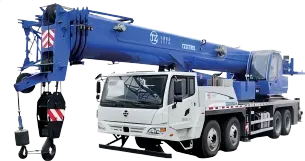
Essential Features and Safety Aspects of 80t Automobile Cranes
In the last few decades, safety rules for operating mobile cranes have changed a lot. This is because of both sad events and new technologies. Today's 80-ton cranes have many backup devices that keep workers, people on the ground, and buildings nearby safe.
Advanced Safety Mechanisms and Compliance Standards
Overload safety systems are the main way to keep things from breaking down because of human mistake or bad load calculations. When sensors detect loads that are too high, the system stops lifting and may need the boom to be retracted before it can continue working. Anti-two-block devices keep the hook block from touching the tip of the boom, which would damage the boom badly or cause the load to fall. When the emergency stop feature is activated, all motions stop right away, and the holding brakes immediately apply to secure the load.
The TZGT80L has stability control technologies that keep an eye on the crane's center of gravity in relation to the outriggers' support polygon. Wind speed monitors can be added to these systems to let workers know when the environment is too dangerous for the load's surface area. In the US, following ASME B30.5 standards makes sure that the rules for creation, testing, and function are up to standard for engineers.
Another important safety issue is the operator's ability to see. The TZGT80L's cab design gives you a wide view of the work area, and available camera systems get rid of hidden spots. Ergonomic control placement keeps operators awake, which is important for safe crane operation, even after long hours of work. Communication tools let you stay in touch with people on the ground who help you place the loads.
Technological Innovations Enhancing Performance
Telematics tools have changed how companies who use multiple cranes handle their fleets. These systems send real-time information to centralised control platforms about where the crane is, how long it has been running, how much fuel it uses, and repair alerts. Predictive maintenance programs look at how things are used and suggest service times before parts break. This cuts down on unexpected downtime that can throw off project plans.
Load moment indicators have changed over time from simple alarms that could be heard to complex screens that showed a lot of useful information. These days' methods show the load weight, the angle and length of the boom, the working radius, and the % of maximum capacity. Some more advanced units have 3D site modelling that shows where the crane is in relation to high power lines, nearby buildings, and underground utilities, all of which can be dangerous and have caused many crane accidents.
Technicians can fix problems without having to go to faraway job sites thanks to online diagnostics. When the TZGT80L's built-in systems notice problems with hydraulic pressure, electrical circuits, or mechanical functions, they send diagnostic codes to service centers. There, experts can often fix the issues through steps that the operator performs, which saves money on costly service calls and moving the equipment.
Comparing Crane Type Configurations
Telescopic boom cranes, like the 80t automobile crane, are very useful in situations where the load needs to be moved around a lot. The automatically extendable and retractable boom doesn't need to be put together by hand, so it can be set up in minutes instead of hours. This ability to quickly deploy is very helpful for companies working on long-term projects like building highways, where the crane moves along the work path as parts are finished.
All-terrain cranes can do the same things as regular cranes, but they can go off-road thanks to special traction and drive systems. Even though these units are very flexible, they usually come at a high price that might not be worth it unless the projects often involve entry ways that haven't been changed. The TZGT80L's overall width of 2800mm and legal road measurements make it possible to get to most building and industrial sites without the need for route studies or security vehicles.
Lattice boom truck cranes can lift more and reach farther, but they don't have the ease of a hydraulic boom extension. Because these cranes need building teams and extra time for design changes, they are best for longer-term projects where the crane will stay in one place. Project planners have to look at these practical differences along with the needs of the job and the time limits.
Maintenance, Operational Efficiency, and Longevity
Reliability of equipment has a direct effect on project plans and the amount of money that contractors make. Unplanned downtime can throw off the schedule for other trades and cause penalties to be paid under the terms of the project contract. Disciplined repair plans keep these problems from happening and keep the worth of the tools.
Preventive Maintenance Protocols
Crane repair plans are based on daily checks before they are used. Before starting work, operators check wire ropes for broken strands, hydraulic systems for leaks, make sure safety devices work and make sure the right amount of fluid is in the system. These short checks find problems before they break down, so fixes can be done during planned downtime instead of while the machine is still running.
The TZGT80L's hydraulic system needs extra care to make sure the fluid is clean. Oil that is contaminated speeds up the wear on precision valve parts and pumps, which causes control to behave erratically and eventually fail. Regular oil samples and analysis find pollution before it does any damage, and filter changes keep the system clean. Temperatures of hydraulic fluids must stay within certain ranges because too much heat breaks down the qualities of the fluid and harms seals.
Non-destructive testing should be done on structural parts on a regular basis to find stress cracks before they get too big to be safe. Ultrasonic and magnetic particle inspection methods find problems below the surface that can't be seen with the naked eye. Boom welds, turntable attachment points, and chassis frame links that are stressed over and over again are examples of critical areas. Inspection times depend on how often the system is used and how it has been loaded in the past.
Optimizing Fuel Consumption and Operating Costs
The TZGT80L's 294kW engine has enough power for all of the crane's tasks, but careful use can cut down on fuel use without lowering output. Efficient combustion control and waste treatment systems in modern engines help them meet strict pollution standards while also being cost-effective.
Operators can cut down on idle time by turning off the engine during long breaks in pulling work. However, the starting and battery will wear out faster if the engine is turned on and off a lot. When full flow isn't needed, load-sensing hydraulic systems automatically lower pump output. This stops lost energy from going through release valves. When the user calls for full power, these systems react right away, keeping quick control while using less fuel during lighter operations.
When figuring out the best way to get from one job place to another, planners take into account road curves, traffic patterns, and lengths. Combining several jobs close together into one mobilisation cuts down on the total number of miles travelled. Some companies carefully place cranes in certain areas to cut down on reaction times for emergency lifts that bring in more money even though they aren't used as often.
Troubleshooting Common Operational Challenges
Problems with hydraulic systems in a construction crane show up as slow operation, jerky motions, or loss of all functions. Air exposure often leads to weak control response, which needs system bleeding to get back to working properly. When seals fail, they let air leak inside, which lowers the pressure that can be used, which lowers the pulling capacity and control accuracy. Systematic fixing finds specific circuits, valves, or motors that are having problems. This lets fixes be made more precisely instead of replacing all the parts.
When a crane is in use, huge loads put stress on the outrigger systems and spinning bearings, which cause the chassis to wear out. To keep outrigger pads from cracking or punching through weak ground support, they must stay in full touch with the objects they're attached to. When you lubricate slewing bearings on a regular basis, they don't gradually become stiffer, which makes them harder to turn and speeds up the wear patterns.
Problems with the electrical system can stop safety devices or control functions from working on a crane, even if the mechanical parts are still working. Modern cranes have a lot of computer tracking that makes diagnosis easier but means you need to know a lot about electronics to fix problems. Corrosion-related problems can be avoided by keeping electrical lines clean and secure. This is especially important for cranes that work in salty seas or during the winter.
Procurement Insights for 80t Automobile Cranes
Buying heavy moving equipment requires a large amount of money and careful consideration of how it will be used, how it will affect finances, and what kind of long-term support it will need. Buying things has long-lasting effects on projects, so it's important to carefully consider them before making a choice.
Financial Considerations and Acquisition Models
When you buy something outright, you have full power over it and don't have to pay for it every month. This is appealing to builders who use cranes often. In order to make the choice, there must be available cash and faith in the amount of work that will be needed in the future. When you own something, you have to take care of it, store it, insure it, and eventually get rid of it when technology stops working or it gets worn out.
Leasing is an option that can help you save money while still giving you access to tools. With operating leases, payments are counted as business costs, so the balance sheet doesn't show any debt. This is good for financial systems that like financing that doesn't show up on the balance sheet. Maintenance clauses are often included in lease terms, giving lessors with specific service skills the responsibility of care. Contractors need to compare the total costs of leasing versus the costs of buying tools over its useful life.
Rental markets for an 80t automobile crane give people access to certain pieces of equipment for set amounts of time. This is great for projects that need more temporary capacity than their own fleet can provide. In some markets, daily or weekly hire rates include operator services, so you don't have to worry about finding qualified crane operators when there aren't enough workers. Rental agreements put the risk of breakdowns on the rental companies. However, contractors have to include rental costs in their bids for projects and can only make a few changes to the equipment.
Evaluating Manufacturers and Support Networks
As China's first independent heavy equipment manufacturer, TZCO brings more than 70 years of experience making heavy machinery to the crane market. The company has delivered more than 40,000 sets of equipment to more than 70 countries, showing that it has a global reach and a wide range of application knowledge. This past gives buyers faith that the maker will be around for as long as the equipment is used, which is important for making sure that parts and expert help will always be available.
Some things that show the quality of a manufacturing plant are its certificates and the way it makes things. World-class "Lighthouse Network" sites and clever manufacturing showcase plants with advanced quality control systems are run by TZCO. Statistical process controls keep all the parts within a tight range, which lowers the unpredictability that makes equipment less reliable in modern production settings.
How well makers help with starting, optimising operations, and fixing problems depends on their technical support infrastructure. TZCO runs one National Key Laboratory and 27 study platforms that are all focused on coming up with new ideas and helping customers with their applications. Putting money into engineering tools helps buyers because they give them access to specialised knowledge that can help them solve odd moving problems or find the best way to set up equipment for a certain job.
Customization Options and Value-Added Services
Standard crane designs work well for many uses, but sometimes changes are needed to meet the needs of a particular job. Different boom lengths, special lifting devices, environmental safety packages, and improvements to the control system can make tools work better for certain types of jobs. The TZGT80L's extra 5-ton counterweight addition is a great example of how customisable it can be. It increases the machine's pulling power for jobs that need it.
Operator training programs make sure that workers know what their tools can and can't do, which has a direct effect on both safety and efficiency. Full training includes checks before operations, understanding load charts, basic handling, and what to do in an emergency. Some makers offer on-site training at customer sites. This way, more than one person can get certified without having to pay for travel or miss work to go to an off-site training center.
Parts transportation skills have a big impact on machine uptime, especially for workers who work in areas far from maker facilities. TZCO is present in more than 70 countries around the world, which suggests that it has well-established delivery networks that can get important parts to customers on time. Agreements for buying things should make it clear when parts will be available, how items that wear out will be stocked, and how to speed up shipping for urgent needs.
Conclusion
The 80t automobile crane is a tried-and-true piece of technology that strikes a good mix between a large lifting capacity and the portability needed for modern projects. Knowing how things work, how to keep them safe, and how often they need to be maintained helps you choose equipment that fits the needs of the project and your organization's resources. The TZGT80L is a great example of modern crane engineering. It takes decades of progress in manufacturing and turns it into a platform that can handle a wide range of heavy lifting problems in the infrastructure, building, and industry sectors. To use a crane effectively, its powers must be matched to the needs of the job, and strict operating control must be maintained to protect people and keep the equipment's value over its long life.
FAQ
What determines how much weight the boom can actually lift at different lengths?
Because of how leverage works, lifting capacity changes in the opposite direction of working radius. The 80-ton limit is for the smallest radius with the boom pulled back. As the TZGT80L's boom gets closer to its 50-meter maximum length, its capacity drops by a lot. At full extension, it could be less than 15 tonnes, based on the boom angle. Manufacturers give out thorough load charts that show the exact capacities for all boom lengths and angles. Before each lift, operators must look at these plans and figure out the safe working loads by taking into account the design of the counterweights and the length of the outriggers.
How do the elements of the ground affect the safety and function of a crane?
The ground bearing capacity has a direct effect on the stability of the crane's outriggers and its total stability. The TZGT80L's outriggers put most of the crane's weight and lifting forces on a small area of pads. This can cause ground pressures that are too high for soft soils to handle. If the ground support isn't good enough, the outriggers can settle, which tilts the crane and lowers its estimated capacity. It could also tip over. A site survey is needed to make sure that the dirt is strong enough or to suggest ways to make it stronger, like using wood mats, steel plates, or designed crane pads that spread the weight over bigger areas.
What skills do people need to be able to operate 80-ton automobile cranes?
Crane workers in the United States are required by law to get a license that shows they know what they're doing and can do it safely. The National Commission for the Certification of Crane Operators runs testing programs that include written tests and practice tests that are specific to the type and size class of crane. In addition to getting certified, users can benefit from manufacturer-specific training on tools like the TZGT80L. This training covers the different ways to handle the tool, the safety systems that are built into it, and how it works.
Partner with TZCO for Your Heavy Lifting Solutions
Choosing the right 80t automobile crane maker has effects on the success of a project that last long after the purchase. TZCO combines more than 70 years of experience with heavy machinery with modern, smart production skills to make equipment that meets the most demanding operating needs and gives your projects the long-term support they deserve. Our TZGT80L model has tried-and-true hydraulic systems, solid engineering that has been tested in thousands of placements, and safety technologies that keep your people, who are your most valuable asset, safe. We understand that buying the tools is only the start of our partnership. Our concept of putting the customer first means that we provide full support for the entire life of your crane, from training for operators and parts logistics to expert advice on difficult lifts. The TZCO 80t car crane solutions can help you move more. You can contact our team at tzcoglobal@tz.com.cn or visit tzcoglobal.com to see all of our heavy equipment, which is made to the highest standards.
References
American Society of Mechanical Engineers. (2021). ASME B30.5: Mobile and Locomotive Cranes Safety Standard. New York: ASME Press.
Dickie, D.E. (2018). Crane Handbook: Design, Selection, and Application Principles. Toronto: Construction Safety Association of Ontario.
Peurifoy, R.L., Schexnayder, C.J., & Shapira, A. (2020). Construction Planning, Equipment, and Methods, Ninth Edition. New York: McGraw-Hill Education.
Shepherd, R. & Kahler, D.M. (2017). Mobile Crane Manual: Inspection, Maintenance and Safe Operation Practices. Des Plaines: American Society of Safety Professionals.
Society of Automotive Engineers. (2019). SAE J1063: Cantilevered Boom Cranes Structures—Method of Test. Warrendale: SAE International.
Wiens, J.A. (2016). Heavy Equipment Operations and Maintenance: Principles and Practice for the Construction Industry. Burlington: Jones & Bartlett Learning.