- English
- French
- German
- Portuguese
- Spanish
- Russian
- Japanese
- Korean
- Arabic
- Greek
- German
- Turkish
- Italian
- Danish
- Romanian
- Indonesian
- Czech
- Afrikaans
- Swedish
- Polish
- Basque
- Catalan
- Esperanto
- Hindi
- Lao
- Albanian
- Amharic
- Armenian
- Azerbaijani
- Belarusian
- Bengali
- Bosnian
- Bulgarian
- Cebuano
- Chichewa
- Corsican
- Croatian
- Dutch
- Estonian
- Filipino
- Finnish
- Frisian
- Galician
- Georgian
- Gujarati
- Haitian
- Hausa
- Hawaiian
- Hebrew
- Hmong
- Hungarian
- Icelandic
- Igbo
- Javanese
- Kannada
- Kazakh
- Khmer
- Kurdish
- Kyrgyz
- Latin
- Latvian
- Lithuanian
- Luxembou..
- Macedonian
- Malagasy
- Malay
- Malayalam
- Maltese
- Maori
- Marathi
- Mongolian
- Burmese
- Nepali
- Norwegian
- Pashto
- Persian
- Punjabi
- Serbian
- Sesotho
- Sinhala
- Slovak
- Slovenian
- Somali
- Samoan
- Scots Gaelic
- Shona
- Sindhi
- Sundanese
- Swahili
- Tajik
- Tamil
- Telugu
- Thai
- Ukrainian
- Urdu
- Uzbek
- Vietnamese
- Welsh
- Xhosa
- Yiddish
- Yoruba
- Zulu
Scissor Lift Insights & Industry Guides
When equipment managers and procurement workers look for reliable helicopter access options, they need more than just specs. They need reliable advice. The 8m scissor lift is a very important purchase for improving safety and efficiency on building sites, in factories, and on infrastructure projects. This complete guide gives useful information based on decades of manufacturing experience and examples from the mining, energy, manufacturing, and transportation fields. Knowing about the technical features, safety rules, and buying methods for these mobile rising work platforms helps people make smart investments while making sure they follow the rules and run their businesses well.
Understanding 8m Scissor Lifts – Features, Types, and Benefits
An 8m scissor lift is a special kind of mobile lifting work platform that can lift people and things up to a maximum platform height of 8 meters. When the operator's reach is taken into account, the working height is usually around 10 meters. This type of equipment uses a crisscrossed pantograph device that is driven by hydraulic cylinders to provide very stable vertical lift. The "8m" number refers to the height of the platform, which is where workers stand and use tools. This makes these units different from smaller access equipment and bigger boom lifts in the same family.
Core Technical Specifications That Define Performance
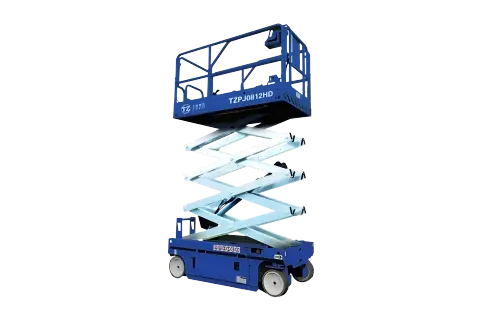
The basic requirement is that the platform can hold a certain amount of weight. Most 8-meter types can safely hold between 250 kg and 500 kg. One example from a well-known brand is the TZCO TZPJ0812HD, which can safely handle 300 kg while still being small at 2.48 m long and 1.16 m wide. With these measurements, you can get through normal doors and narrow industrial hallways. The travel speed changes a lot between the folded position (about 3.5 km/h) and the extended height (0.8 km/h), which is because of safety concerns when working at height. For indoor use without pollution, hydraulic systems need 15 to 25 litres of oil, while electric types use 24V battery systems with capacities between 200Ah and 250Ah.
Power System Variations and Operational Environments
Electric scissor lifts are most often used indoors, where they need to be quiet and produce no pollution. These machines use recharging batteries to power both the moving and pulling motors. Newer models have energy-saving features that make them last longer and charge less often. Diesel-powered models are used for outdoor building and rough terrain tasks because they have enough power to go up to 35–45% grades and work on areas that aren't paved. In the past few years, hybrid models have come out that combine gasoline engines with electric systems to make them more useful on a variety of job sites. Environmental concerns are driving specs more and more. For example, California and European markets' pollution rules are pushing the use of electric and low-emission technologies.
Safety, Efficiency, and Economic Advantages
When compared to scaffolding systems, overhead work platforms don't need to be put together, which can take hours and add time to building plans. A scissor lift can be set up and used by one person in just minutes, which greatly increases the output of work. The stable, protected platform design lowers the risk of falling from stairs and makes room for tools and materials, so you don't have to keep going down to get things. According to an economic study, scissor lifts are 40% to 60% cheaper to use than scaffolds for projects that need to be moved around a lot. Because the equipment is mobile, it can be quickly moved to different work areas. This is especially helpful on big building projects where entry needs change as the work goes on.
How to Safely Operate and Maintain Your 8m Scissor Lift?
Before the first lift cycle of an 8m scissor lift, safety starts. Occupational Safety and Health Administration (OSHA) in the US and similar organisations around the world set rules for training, inspections, and operations that keep workers safe and limit contractors' and facility owners' legal risk.
Pre-Operation Inspection and Training Requirements
Every user has to go through training that is specific to their platform. This training covers things like controls, emergency systems, load limits, and external dangers. ANSI A92.20 rules say that people must have written training before they can use mobile lifting work platforms. Every day before use, the hydraulic fluid levels, battery charge, emergency lowering systems, platform rails and tyre condition should all be checked. By looking at the pivot places of the scissor arms, you can find wear or damage that could weaken the structure. Before placing equipment is used, the ground conditions must be checked. Soft dirt, hills that are too steep, and things hanging in the air are all major dangers that workers must find and fix.
Routine Maintenance Protocols That Extend Service Life
Maintenance checks are usually done every 150 hours of operation or every three months, whichever comes first. Changing the hydraulic fluid, checking the water level in the battery (for lead-acid systems), and greasing the pivot points keep parts from breaking down too soon. According to the manufacturer's instructions, filters need to be inspected and replaced. Clogged hydraulic filters slow down the system and could even cause damage. Low tyre pressure can make a vehicle less stable and less effective, especially on rough terrain units where poor grip and control are caused by low tyre pressure. To keep electrical lines from corroding and cutting off power, they need to be cleaned every so often.
Troubleshooting Common Operational Issues
When platforms won't rise, it's usually because the batteries are dead, the emergency stop systems are set off, or the hydraulic oil levels are below what's needed for operation. When lifting or lowering, jerky action is usually a sign that there is air in the hydraulic lines, which needs to be bled according to the steps in the service instructions. Uneven platform rise could mean that the cylinder seal is wearing out or that the load is not adjusted and is higher than what the design allows. Simple tasks like adjusting emergency stops or charging batteries can be done by operators, but hydraulic fixes and structural welding need to be done by trained professionals. Doing complicated fixes without the right knowledge can put you in danger and may void the guarantees that protect your investment.
Choosing the Right 8m Scissor Lift for Your Business – A Decision Support Guide
The choices you make about what equipment to buy will affect your operations and finances for a long time. The right overhead work platform exactly fits the needs of the job, so you don't have to worry about either not having enough capacity or too much detail, which drives up costs needlessly.
Critical Selection Factors for Your Application
Load capacity standards include more than just the weight of the user. They also include tools, materials, and safety limits that keep the load from being too heavy. When working with metal frame or concrete in construction, you need higher power rates than when installing electricity. Working height decides whether an 8-meter platform is enough for the project or if higher equipment is needed. Accurate assessment avoids expensive equipment changes in the middle of a project. Depending on the terrain, slab electric models with smooth tires may be enough or rough terrain models with four-wheel drive may be needed. Indoors, where the flooring is sensitive, tires that don't leave marks are needed to keep the surface from getting damaged. Outside, sites can handle tires with strong tread patterns that improve grip.
Comparing Scissor Lifts with Alternative Access Solutions
8m scissor lift have a longer horizontal reach than scissor platforms, which makes them better for jobs like inspecting bridges, cutting trees, and working on walls that need to be placed laterally. As a trade-off, the base is smaller and can't hold as much weight, which makes it harder to move things. Scaffolding systems offer bigger work areas that are good for teams doing long tasks in set locations, but they can't be moved around like scissor lifts can, which makes them useful on changing job sites. When looking at costs, scissor lifts are more cost-effective when they need to be moved around a lot, while scaffolding is more cost-effective when the work needs to be done in one place for weeks or months.
Rental Versus Purchase Strategic Considerations
Rental agreements work well for projects with clear deadlines and equipment that needs to be accessed only sometimes. Contractors bidding on a six-month bridge repair job can take advantage of rental terms that don't require them to make any financial investments and let rental companies handle the upkeep. When yearly utilisation rates are more than 60%, it makes financial sense to buy something because the costs of acquisition can be spread out over many projects. Fleet workers who are in charge of multiple job sites at the same time can lower the cost per unit by buying in bulk. They can also keep tools available to meet tight project dates. Leasing programs are a good middle ground because they protect your capital while giving you long-term access to tools at fixed monthly costs.
Market Insights and Top Brands of 8m Scissor Lifts in 2026
As makers add new technologies and adapt to tighter safety rules, the global aerial work platform market keeps changing. Knowing the competition helps people who buy things find sellers who can protect their equipment investments with stability and support.
Leading Manufacturers and Their Market Positioning
Taiyuan Heavy Machinery Group Co., Ltd. (TZCO) has been making heavy equipment for more than 70 years and is now entering the overhead platform business. TZCO was the first company in China to create and build its own heavy machinery. It has sent more than 40,000 sets of equipment weighing a total of 10 million tonnes to projects in over 70 countries. The company runs one National Key Laboratory and five national-level innovation platforms that keep new products coming out. There are world-class "Lighthouse Network" sites and national-level intelligent manufacturing showcase plants that make sure the standard is always the same. TZCO's technical skills are shown by the TZPJ0812HD model, which has small measurements, a 300-kilogram capacity, and an energy-efficient design that works well in harsh industrial settings.
Quality Certifications and Compliance Standards
Designing and making a mobile rising work platform must follow international standards. General rules are set by ISO 16368. More specific safety rules can be found in ANSI A92.20 and EN 280. These rules cover things like structure calculations, stability tests, and how well emergency systems work. Reputable makers keep third-party certificates that check that they follow these guidelines. This keeps buyers from being held legally responsible. Quality management systems that are approved to ISO 9001 show that a company is dedicated to using consistent production methods. Green Factory licenses show that a factory is responsible with the environment when it comes to making things, which is becoming more and more important as companies' sustainability goals affect their buying choices.
User Experience and Performance Feedback
When judging the performance of a scissor lift, equipment workers always look at how stable the platform is and how quick the controls are. Units with proportional remote controls let you place things precisely, which speeds up the work and makes the operator less tired. When it comes to electric models, battery usage is very important. Longer times of operation between charging rounds make multi-shift operations more productive. Total cost of ownership is affected by how easy it is to do maintenance. Designs with service spots that are easy to get to cut down on expert work hours and downtime during regular maintenance. Premium equipment is different from cheaper options because it lasts longer in tough environments. Strong construction can handle the vibrations, dust, and temperature changes that are common in mining, building, and heavy industry settings.
Conclusion
To choose and use 8m scissor lifts, you need to pay close attention to technical specs, safety rules, and buying strategies that match the equipment's abilities to the needs of the industry. This guide has looked at the main differences between the different types of platforms, gone over safe and reliable repair methods, and given you a way to decide whether to buy or rent. Market research that talks about top companies like TZCO and their history in engineering helps buyers find partners who can provide both high-quality products and long-term support. The information given gives building workers, mine operators, energy project developers, and site managers the power to make smart choices that boost output while upholding the safety standards needed in high-risk work settings.
FAQ
For safety reasons, what requirements should 8m scissor lifts in the US meet?
ANSI A92.20 guidelines for mobile lifting work platforms must be followed by all equipment used in the US. These rules cover designing the structure, figuring out its safety, setting up the control systems, and having emergency lowering methods. OSHA rules say that operators must be trained and that daily checks must be recorded in logbooks. Manufacturers should give out legal paperwork and user guides that explain how to safely operate their products.
How often should upkeep be done on types of electric scissor lifts?
Electric platforms need to be inspected every 150 hours of use, or every three months. As part of maintenance, the battery system is checked, the amount of the hydraulic fluid is checked, the electrical connections are cleaned, and the pivot points are oiled. Certified experts do full inspections once a year to make sure the building is safe to use. They check the structure's stability, test the load, and make sure the emergency systems work.
Can electric 8m scissor lifts effectively take the place of gas models for building work outside?
These days, electric scissor lifts can do a lot of work outside, especially on flat areas when the weather is nice. There are limits to how well it works in rough terrain, for long periods of time when the battery capacity is exceeded, and when it's cold outside, when battery efficiency drops. Diesel or hybrid platforms with more power and operating freedom are often needed for projects with rough areas or long shifts of continuous operation.
Partner with TZCO for Reliable 8m Scissor Lift Solutions
TZCO makes industrial-grade overhead work platforms and has been making heavy machinery well for over 70 years. Our TZPJ0812HD scissor lift can carry up to 300 kg, is small, and has an electric drive system that uses little energy. It is used in building, mining, manufacturing, and transportation, all of which are tough settings. As a reliable 8m scissor lift maker, we offer full support, from helping you choose the right specifications to providing after-sales service. This way, we can make sure that your investment in equipment gives you the most efficiency and safety for as long as it works. Our global network includes more than 70 countries and is backed by smart factories and national-level research tools that keep us coming up with new ideas. Get in touch with our team at tzcoglobal@tz.com.cn to talk about your project needs and find out how TZCO's engineering know-how can improve your aerial access with cost-effective solutions that fit your needs.
References
American National Standards Institute. (2023). ANSI A92.20: Design, Calculations, Safety Requirements and Test Methods for Mobile Elevating Work Platforms. Washington, DC: ANSI Publications.
Occupational Safety and Health Administration. (2022). Mobile Elevated Work Platforms: Operator Training and Safe Use Guidelines. U.S. Department of Labor, OSHA Publication 3850.
International Organization for Standardization. (2021). ISO 16368: Mobile Elevating Work Platforms – Design, Calculations, Safety Requirements and Test Methods. Geneva: ISO Standards Catalog.
Construction Industry Institute. (2023). Aerial Work Platform Selection and Procurement Best Practices for Heavy Civil Projects. Austin: University of Texas Research Consortium.
European Committee for Standardization. (2022). EN 280: Mobile Elevating Work Platforms – Design Calculations – Stability Criteria – Construction – Safety – Examinations and Tests. Brussels: CEN Technical Publications.
National Institute for Occupational Safety and Health. (2024). Preventing Falls from Elevating Work Platforms: Engineering Controls and Safety Systems Analysis. NIOSH Publication No. 2024-118, Centers for Disease Control and Prevention.