- English
- French
- German
- Portuguese
- Spanish
- Russian
- Japanese
- Korean
- Arabic
- Greek
- German
- Turkish
- Italian
- Danish
- Romanian
- Indonesian
- Czech
- Afrikaans
- Swedish
- Polish
- Basque
- Catalan
- Esperanto
- Hindi
- Lao
- Albanian
- Amharic
- Armenian
- Azerbaijani
- Belarusian
- Bengali
- Bosnian
- Bulgarian
- Cebuano
- Chichewa
- Corsican
- Croatian
- Dutch
- Estonian
- Filipino
- Finnish
- Frisian
- Galician
- Georgian
- Gujarati
- Haitian
- Hausa
- Hawaiian
- Hebrew
- Hmong
- Hungarian
- Icelandic
- Igbo
- Javanese
- Kannada
- Kazakh
- Khmer
- Kurdish
- Kyrgyz
- Latin
- Latvian
- Lithuanian
- Luxembou..
- Macedonian
- Malagasy
- Malay
- Malayalam
- Maltese
- Maori
- Marathi
- Mongolian
- Burmese
- Nepali
- Norwegian
- Pashto
- Persian
- Punjabi
- Serbian
- Sesotho
- Sinhala
- Slovak
- Slovenian
- Somali
- Samoan
- Scots Gaelic
- Shona
- Sindhi
- Sundanese
- Swahili
- Tajik
- Tamil
- Telugu
- Thai
- Ukrainian
- Urdu
- Uzbek
- Vietnamese
- Welsh
- Xhosa
- Yiddish
- Yoruba
- Zulu
A Guide of Usage of Automobile Cranes in Construction Industry
The 80t automobile crane is now an important part of modern building because it combines portability with pulling power. These mobile cranes have a frame that can be moved easily on the highway and a large lifting capacity. This makes it easier to quickly move big equipment between job sites. Whether you're in charge of building a bridge, putting power generation equipment, or working with premade building parts, knowing how to use and deploy these machines correctly has a direct effect on project timelines, safety records, and overall profits.
Understanding 80t Automobile Cranes: Specifications and Operational Insights
Core Technical Specifications That Define Performance
The way an 80t truck crane is built affects its real-world abilities, which go far beyond its stated capacity number. As an example, the TZGT80L from Taiyuan Heavy Machinery Group has a 50-meter boom length and a maximum pulling moment of 3293kN·m. It is driven by a L9NS6B400 engine that produces 294kW at 1900 r/min. The normal arrangement of 20 tonnes of counterweights, with an extra 5 tonnes available as an option, gives the steadiness needed for difficult moves.
It is still very important to understand the load chart. When the boom is withdrawn, the minimum radius is usually around three meters, which is where the 80-ton number applies. Due to the science of leverage, the real capacity drops by a lot at full 50-meter stretch, and is often less than 10 tonnes. The five-section telescopic boom is made of high-tensile structural steel that has a yield strength of 960 MPa or more. This reduces the amount of dead weight while keeping the boom stiff against wind loads and movement during operation.
The frame is usually set up with an 8x4 drive system and a length that can handle speeds of up to 80 km/h on the highway. The TZGT80L is 14,990 mm long, 2,800 mm wide, and 3,935 mm tall. These sizes were carefully chosen to make it easy to manoeuvre through city streets while keeping its center of gravity low for safety. The hydraulic system works at a working pressure of about 35 MPa and uses load-sensing variable displacement piston pumps that let multiple functions happen at the same time. For example, lifting, slewing, and boom extension can all happen at the same time with precise control.
Modern units have Load Moment Indicator (LMI) systems that compare real-time lifting data to safety limits that have already been set. This computer keeps an eye on the boom angle, extension length, load weight, and support setup. If these factors get too high, the activities will stop automatically. In Europe, the system meets EN 13000 standards, and in North America, it meets ASME B30.5 standards. This provides recorded safety proof that meets insurance requirements and governmental reviews.
Operational Environments and Terrain Capabilities
These cranes are great for situations where they need to be able to move around a lot and lift heavy things. For urban bridge repair projects, the small size makes it possible to use outriggers on narrow roads to lift 30–40-ton precast concrete pieces. When in full span mode, the H-pattern outrigger setup usually reaches 7-8 meters, giving you the stable platform you need for precise placement.
Petrochemical plants are another great place to use the product. The long boom reach makes it possible to lift heat exchangers and distillation column parts over existing pipework during turnaround repair without going into dangerous areas. The chassis's ground clearance and tire specs let it work on packed dirt surfaces that are common at industrial sites. However, if the ground is very rough or soft, it needs to be prepared with wooden mats or steel plates to spread out the outrigger loads.
Critical working limits for a construction crane are set by wind conditions. Most makers say that lifts should stop when wind speeds reach 9.8 m/s, which is about 22 mph or Beaufort Scale 5. Even less is allowed for loads with a lot of surface area, like wall panels or steel beams. The crane operator has to look at more than just the steady wind. They also have to look at shifting patterns and how the load being lifted will affect the sails as it moves.
Maintenance Protocols That Protect Your Investment
A strict repair plan is directly linked to how long equipment lasts and how much it's worth when it's time to sell it. According to ISO 4309 standards, wire rope should be inspected every day before it is used to keep track of its state. If six randomly distributed broken wires appear within a length of six rope diameters or fourteen broken wires appear within thirty diameters, the rope must be replaced right away. Deformation, kinking, or heavy rust are also reasons to replace the wire, even if there aren't many breaks.
Maintaining the health of a hydraulic system requires close attention. "Boom creep," in which the boom slowly falls under pressure without the operator's help, is caused by a leaky internal pump or valve. As seals wear down, this dangerous situation slowly gets worse, so it's a good idea to check the pressure every month. Every 500 hours, hydraulic fluid monitoring finds contamination before it causes a part to break. The filtration system usually uses 10-micron absolute filters that need to be changed based on difference pressure readings instead of just randomly every so often.
The focus of structural checking is on areas with a lot of stress, which is where fatigue cracks start. Every year, magnetic particle inspection or acoustic testing is good for the boom heel pins, turntable fixing bolts, and chassis frame welds. These non-destructive testing methods find flaws below the surface that can't be seen with the naked eye. The boom parts need to be checked for alignment—twists or bends caused by bad handling or overloading weaken the structure even if there is no visible damage.
Pay close attention to the tuning of the LMI system. Due to the small safety gaps at full capacity, a five percent mistake in figuring out the load causes a big risk. Factory-trained techs recalibrate the system once a year to make sure it properly shows how the crane is currently set up, taking into account any changes to the counterweight or boom additions that have been made since the original launch.
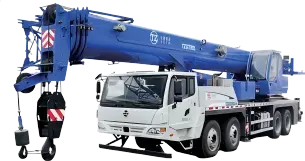
Comparing 80t Automobile Cranes with Other Crane Types and Models
Capacity and Mobility Trade-offs Across Equipment Classes
When making decisions about what to buy, it helps to know where the 80-ton class fits in the bigger picture of cranes. Lighter 50-ton truck cranes use less fuel and are easier to move around. They can often travel without having to remove their counterweights and can go over weight-restricted bridges more easily. But their smaller lifting ability and shorter boom length (usually no more than 40 meters) make them less useful for projects with different lifting needs.
The opposite trade-off structure can be seen for crawler cranes with similar size ranges. Their fixed base gives them the best steadiness on soft or uneven ground, so they can work without outriggers and keep their full capacity even when they rotate 360 degrees. But these benefits come with big restrictions on movement. When moving crawler cranes from one place to another, they need to be taken apart and transported in a special way, which can take days and cost a lot of money for short-term projects. The 80t truck crane can move things from one place to another in hours instead of days, which is a huge benefit for workers who are working on multiple projects at the same time.
All-terrain 80t automobile cranes are the most expensive type of crane. These machines are like mobile truck cranes, but they can go off-road better thanks to their all-wheel drive and advanced handling systems. Most of the time, they have longer boom choices and can lift more at wider angles. The difference in price between them and regular truck cranes can be 30 to 40 percent, so they are only financially viable for specific jobs or when one unit has to work in a variety of site conditions without any backup equipment.
Leading Models and Manufacturer Considerations
The world market has a lot of choices, and each one has its own tech philosophy. Well-known European companies put a lot of emphasis on making their drivers comfortable and adding troubleshooting systems. These systems often include telematics that send real-time performance data to fleet managers. These features usually come at a higher cost because they make scheduling upkeep easier and provide proof for compliance checks.
Asian companies have gotten a big piece of the market by offering reasonable value. Taiyuan Heavy Machinery Group is a good example of this trend; they have been making machines for more than 70 years, so they know that the TZGT80L will work well. The company's 27 study platforms and National Key Laboratory keep coming up with new ideas, and their Lighthouse Network production sites make sure that the standard is always the same. TZCO has the world service network needed to support foreign projects because it has sent over 40,000 sets of equipment to more than 70 countries.
The structure of a manufacturer's guarantee shows how confident they are in the stability of their products. Comprehensive covering that goes beyond the basic engine to include structural and hydraulic parts is a sign of good making. When fixes need to be done, the length of downtime depends on how dense the service network is. Manufacturers with regional parts stores and factory-trained techs keep costly idle times to a minimum.
Enhancing Safety and Operational Efficiency on Site
Critical Safety Protocols and Certification Requirements
The most important thing for crane safety is that operators are certified. In the US, OSHA rules say that you can only get certified through recognised testing centers. There are written and practice tests that are specific to the type of crane and its size class. Most certifications need to be renewed every five years, but in some places, you have to do repeat training every year. Before assigning a job, employers must make sure that the license is still good and keep records that can be inspected by regulators.
While the Load Moment Indicator device offers technology protections, human judgement is still the most important thing. Instead of depending only on what they can see, operators must independently check load weights using scale tickets or engineering figures. Before deploying outriggers, the ground conditions need to be checked. Subsurface holes caused by utilities or underground buildings can lower the carrying capacity. Timber mats or steel support pads spread the weight over a large enough surface area. The size of the mats or pads is based on how much weight the soil can hold, which can be found through geotechnical investigations or safe estimates.
Most lifting accidents can be avoided by making sure the user and people on the ground can talk to each other. Standardised hand signs (ASME B30.5 in North America) should be used, and a person whose job it is to signal should keep eye contact with the lifter the whole time. Radio contact is a backup, but it can't be used instead of visible signals because of the delay and chance of confusion. When lift plans are made before complicated operations, they list possible dangers, set off-limits areas, and exit conditions that allow any team member to stop work if safety concerns arise.
Operational Optimizations and Environmental Considerations
Inspections before operations for a construction crane take 15 to 20 minutes, but they save hours of time by preventing problems that could have been avoided. The review should cover things like fluid levels, tyre state and pressure, hydraulic leaks, damage to the structure, the stability of the wire rope and how well the LMI works. Keeping track of these checks makes the maintenance record that protects the guarantee and helps with insurance claims if something goes wrong.
Fuel economy optimization balances productivity against operating costs. Modern engine control systems instantly change the power output based on the load, but how the engine is operated has a big effect on the rate of usage. Smooth control inputs lower pressure spikes in the hydraulic system that waste energy as heat. Planning lift routines so that boom adjustment and slew angle changes happen as little as possible cuts down on cycle times and fuel use.
The term "environmental sustainability" includes more than just emissions. It also includes site effect. Low ground-pressure designs keep the earth from getting compacted and rutted, which lowers the cost of repairs and the damage to the environment. Noise issues are important in cities; some places have limits on working hours or decibel levels, so choosing engines and hydraulic pumps that don't make a lot of noise is more of a legal requirement than a personal choice.
Case Studies and Practical Applications in Construction
Infrastructure Projects Demonstrating Measurable Benefits
A recent job to fix up a highway bridge in the Mid-Atlantic shows how the 80-ton class is better. The contractor had very little time to close the roads—only four hours a night to place the beams. Moving a crawler crane would have taken the whole first week, and a smaller truck crane wouldn't have been able to hold the 35-ton concrete pieces. An 80t automobile crane went from one bridge spot to another along a 15-mile route and set up in 45 minutes at each site. The job was finished two weeks early, which saved money on liquidated damages and let the company get early finishing bonuses that helped pay for the tools.
The building of wind farms is another ideal application. Installing turbine parts takes a lot of reach and capacity, but the sites are often spread out over large areas with dirt roads that make it hard to get to them. One green energy worker said that moving from crawler cranes to 80t truck cranes cut the time it took to finish their project by 30%. The mobile cranes went from one turbine pad spot to another without taking anything apart. This kept the site productive even though it was spread out over a large area. The fuel-efficient power plants cut down on running costs and met the environmental goals of the project.
Lessons from Industrial and Manufacturing Applications
A steel mill growth project showed how important it is for operators to know how to use the equipment and for the machinery to be able to do its job. Placing the tools for handling ladles had to be done with great accuracy—within millimeters—because any mistakes in line would stop the overhead crane system from working right. The TZGT80L's smooth hydraulic control and clear sight for the user helped the setup team meet the limits on the first try, saving them from having to do expensive shifting cycles that happened during older equipment-based growth.
The procurement managers working on these projects keep stressing how important it is for manufacturers to be involved. Getting technical help with planning the lift, like figuring out how to read the load charts and making suggestions for the gear, stopped a number of possible problems before they happened. It was just as helpful to have application engineers on hand who know both how to use the tools and how to deal with problems that are unique to the business. This shows how important it is to choose makers with a lot of experience in your unique application instead of just looking at specs and prices.
Conclusion
It is important to find a good balance between technical specs, practical needs, and long-term help when choosing and using 80t automobile cranes. These machines are in a good spot among heavy equipment because they have a lot of power without giving up the movement that keeps modern building projects on schedule. To be successful, you need to know the limits of the load chart, follow strict safety rules, and work with makers who offer full help throughout the lifecycle of the equipment. The projects shown show that picking the right tools and operating it correctly can pay off in the form of higher output, lower risk, and better project economics.
FAQ
What determines how much weight the boom can actually lift at different lengths?
The 80-ton number only applies at the smallest radius, which is usually about three meters when the boom is fully retracted. As the boom's length or radius grows, the force of leverage makes it much less powerful. Most 80t automobile cranes can only lift 10 tonnes at their full 50-meter length. The load chart that comes with every crane shows how much weight it can hold for all combos of boom length and radius. Before each lift, you should always look at this picture. The Load Moment Indicator automatically upholds these limits, stopping activity when they are exceeded.
How does the design of the outriggers change the lifting capacity?
Outrigger spread has a big effect on steadiness and the loads that can be used. Most 80t cranes can be set up in both full-span (H-pattern, usually 7-8 meters wide) and reduced-span ways. The Load Moment Indicator needs correct information about how the structure is set up because its pulling ability drops a lot in reduced-span mode. When you use full-span load maps when you are actually deployed in shortened span, you create an instant tipping risk. Conditions of the ground are also important. Soft dirt lowers the load-bearing capacity, so bigger support pads are needed to safely spread the load.
What repair times keep devices working well?
Daily checks before operations include checking the amounts of fluids, the state of the wire ropes, for hydraulic leaks, and making sure the safety systems work. When the number of broken wires goes over the ISO 4309 limits or when bending and rust show up, wire rope needs to be replaced right away. Manufacturers recommend changing the hydraulic oil and filter every 500 to 1000 hours of operation. Non-destructive testing methods used on a structure once a year can find stress cracks before they become dangerous. Every year, the LMI should be calibrated and checked to make sure that the accuracy stays within acceptable limits.
Partner with TZCO: Your Trusted 80t Automobile Crane Supplier
TZCO has the 80t automobile crane (TZGT80L), a mobile crane that was designed after seven decades of making great products. It is ready to help you with your big moving needs. Our National Key Labora)ory and 27 research platforms make sure that new ideas are always being considered, and our Lighthouse Network facilities keep up the high quality standards that have made people in 70 countries trust TZCO equipment. The TZGT80L combines modern features like a 50-meter boom reach, a lifting moment of 3293kN·m, and a fuel-efficient engine with a track record of dependability. It also comes with full service support and original parts are easy to find. Talk to our team at tzcoglobal@tz.com.cn about the details of your project and find out how TZCO's customer-first method gives you value beyond the tools itself.
References
American Society of Mechanical Engineers. (2021). ASME B30.5-2021: Mobile and Locomotive Cranes. New York: ASME Press.
European Committee for Standardization. (2020). EN 13000:2020 Cranes - Mobile Cranes. Brussels: CEN Publications.
Occupational Safety and Health Administration. (2022). OSHA 1926 Subpart CC: Cranes and Derricks in Construction. Washington DC: U.S. Department of Labor.
International Organization for Standardization. (2019). ISO 4309:2017 Cranes - Wire Ropes - Care and Maintenance, Inspection and Discard. Geneva: ISO Standards.
National Commission for the Certification of Crane Operators. (2023). NCCCO Practical Examiner Standards for Mobile Crane Operator Certification. Fairfax: NCCCO Publications.
Construction Industry Institute. (2022). Best Practices for Heavy Lift Planning and Execution in Industrial Construction Projects. Austin: CII Research Reports.