- English
- French
- German
- Portuguese
- Spanish
- Russian
- Japanese
- Korean
- Arabic
- Greek
- German
- Turkish
- Italian
- Danish
- Romanian
- Indonesian
- Czech
- Afrikaans
- Swedish
- Polish
- Basque
- Catalan
- Esperanto
- Hindi
- Lao
- Albanian
- Amharic
- Armenian
- Azerbaijani
- Belarusian
- Bengali
- Bosnian
- Bulgarian
- Cebuano
- Chichewa
- Corsican
- Croatian
- Dutch
- Estonian
- Filipino
- Finnish
- Frisian
- Galician
- Georgian
- Gujarati
- Haitian
- Hausa
- Hawaiian
- Hebrew
- Hmong
- Hungarian
- Icelandic
- Igbo
- Javanese
- Kannada
- Kazakh
- Khmer
- Kurdish
- Kyrgyz
- Latin
- Latvian
- Lithuanian
- Luxembou..
- Macedonian
- Malagasy
- Malay
- Malayalam
- Maltese
- Maori
- Marathi
- Mongolian
- Burmese
- Nepali
- Norwegian
- Pashto
- Persian
- Punjabi
- Serbian
- Sesotho
- Sinhala
- Slovak
- Slovenian
- Somali
- Samoan
- Scots Gaelic
- Shona
- Sindhi
- Sundanese
- Swahili
- Tajik
- Tamil
- Telugu
- Thai
- Ukrainian
- Urdu
- Uzbek
- Vietnamese
- Welsh
- Xhosa
- Yiddish
- Yoruba
- Zulu
Boom Lifts vs Scissor Lifts: A Guide to Aerial Lift Selection
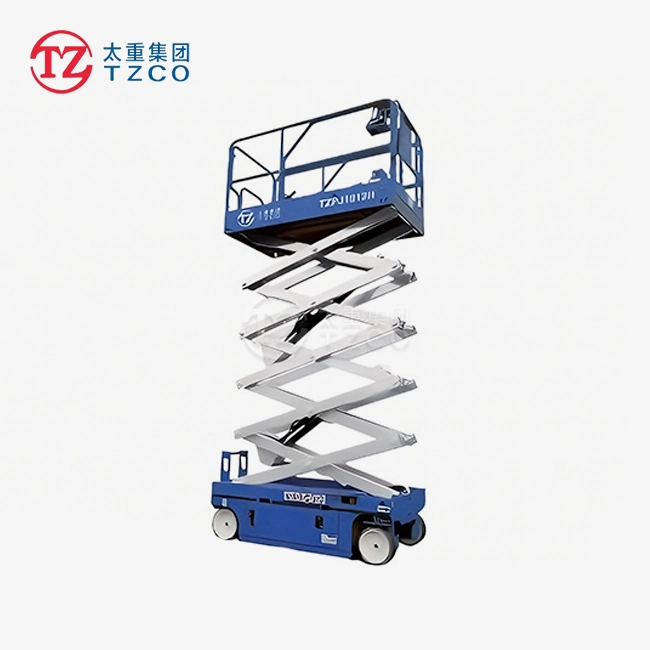
Choosing the right aerial lift isn't just about how high it can go; it's also about making sure that the equipment's powers match the way you do business. When choosing between boom lifts and scissor lifts, the choice depends on the size of the area, the type of terrain, and the weight of the load. A 6m scissor lift, like TZCO's TZPJ0612HD, can reach up to 8 meters in height and safely hold up to 300 kg. It is perfect for controlled vertical access situations. Boom lifts, on the other hand, have a flexible horizontal reach that lets you get around objects and into hard-to-reach places. Knowing these basic differences will help you make a buying choice that fits the needs of the project, meets safety standards, and maximises long-term worth.
Understanding Boom Lifts and 6m Scissor Lifts: Basics and Key Differences
Aerial work platforms are very important tools for workers who are in charge of building infrastructure, maintaining factories, and running facilities. How well your team does work at height depends on the difference between scissor lifts and boom lifts.
Scissor Lift Design and Primary Applications
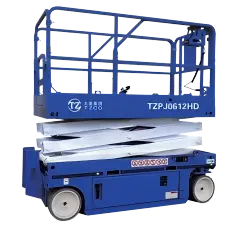
A crossing pantograph device that stretches vertically makes scissor lifts work. This way of thinking about design is shown by the TZCO TZPJ0612HD model, which has a small size that is 2.48m long and 1.16m wide. This setup makes it possible for the equipment to fit through normal doors while keeping workers and materials at a fixed height. The height of the platform is 6 meters, but the actual working height is 8 meters because the user has to reach down to use it.
Most scissor lifts made for indoor use are powered by electric drive systems. For both moving and pulling, the TZPJ0612HD uses a 24V/230Ah battery setup with DC24V motors that are rated at 3.3KW. This setup gets rid of pollution and lowers noise levels, which are important for working in places like factories, stores, and office buildings where noise and air quality rules apply.
Scissor lifts are used by warehouse workers who need to reach product racks from above, building maintenance teams who need to install light fixtures or HVAC parts, and construction crews who need to finish off rooms inside. The stable base can hold up to 300 kg safely and can handle multiple workers and tools at the same time.
Boom Lift Characteristics and Operational Advantages
Boom lifts are very different in how they are built and what they can do. The arms on these tools can spread both vertically and horizontally. They are called flexible or extending arms. With this movement feature, workers can move the platform over obstacles, around structural elements, or next to building surfaces that tools that can only work vertically can't reach.
There are two main types of boom lifts: flexible (straight) booms and hinged (knuckle) booms. Telescopic versions can reach higher, usually 40 to 60 meters, which is useful for tasks like inspecting bridges or building tall buildings. Articulated models give up some vertical range to be more manoeuvrable around complicated shapes. This makes them good for work in shipyards, power plants, and industrial plant upgrades.
Standard scissor lifts aren't as mobile as boom lifts, so they can't handle rough terrain or uneven areas as well. Big rubber tires on four-wheel drive models let them work on building sites, mines, and quarries where the ground conditions aren't always the same. This ability to work on rough ground comes at a cost when it comes to using them indoors, since boom lifts usually have bigger turning circles and may cause floor loading issues in some buildings.
Comparing Reach, Mobility, and Platform Dimensions
Platform sizes affect how many people and what kinds of tools each type of lift can hold. Most scissor lifts have bigger work platforms, and the TZPJ0612HD has plenty of room for workers and their tools. This large deck area is helpful when tasks need to be done at a high level for a long time or when several workers are working together on the same project.
Because the arms of a 6m scissor lift have to be able to stretch, boom lifts have smaller platform covers. The smaller platform sizes are good for jobs that only need one person, but they may need to be moved around more often when bigger materials need to be moved.
The main benefit of boom lifts is their horizontal reach. When it comes to getting to places right above their base, scissor lifts are great. But boom setups can reach up to 25 meters away. This feature gets rid of the need to move tools around a lot when working on large, horizontal areas like train infrastructure or port crane upkeep.
When procurement workers understand these basic differences, they can find equipment that really meets business needs instead of just checking a box for height standards.
Operational Performance and Safety Considerations
Performance measures and safety compliance are important parts of buying an aerial lift that can't be changed. Equipment mismatches that hurt productivity and worker safety can be avoided by comparing specs to real job conditions.
Height Capacity and Load Specifications in Practice
The TZCO TZPJ0612HD has a 6-meter platform height and a maximum working height of 8 meters. The specs in this document work for most indoor industry tasks, like maintaining factories, running warehouses, and managing business buildings. The 300 kg safe working load is enough for two workers and their tools without going over the limits of the design.
There is a lot of height and reach that boom lifts can reach. Models used for building bridges or tall buildings can reach working heights above 40 meters. However, as the boom extension goes up, the load capacity often goes down. This means that operators have to carefully measure the platform loading based on the position of the arms. This changing loading factor adds complexity that isn't present in scissor lift operations, where the load capacity stays the same no matter how high the lift is.
The TZPJ0612HD's overall weight of 2,300 kg is an important feature for building managers who are looking at floor loading limits. Slab-on-grade concrete can support this weight class in many industrial settings. However, raised floors, mezzanines, or specialised settings like data centers need a careful structural study before deployment.
Terrain Adaptability and Mobility Characteristics
Electric scissor lifts work best on flat, hard ground. The TZPJ0612HD is designed to be easy to move around in tight areas. Its 1.16-meter width makes it easy to get through normal industrial doors and through narrow paths between equipment or racks. Because it is so small, the machine is perfect for retrofitting in working buildings where room is limited.
Boom lifts with gas engines and four-wheel drive systems work best outside and on rough ground. Electric scissor lifts would not be able to move on steep sites, muddy situations, or sloped areas that these tools can. The stronger tire designs and higher ground clearance deal with the facts of a building site where the grade isn't quite finished.
In between these two groups are hybrid models, which are electric scissor lifts with better outdoor features. However, their performance is still not as good as that of rough terrain boom lifts that are made just for that reason. When making purchases, people need to be honest about the working environment. Trying to use equipment beyond its design limits raises the risk of breakdown and safety risks.
Regulatory Compliance and Safety Protocols
OSHA rules for using flying lifts set standards for training, checks before use, and limits on how they can be used. Both scissor lift and boom lift workers have to get certified by showing they know how to use the equipment, spot hazards, and handle emergencies.
There are safety tools on the 6m scissor lift TZPJ0012HD that deal with usual dangers. If the main hydraulic systems fail, a backup lowering system lets the structure fall safely. Platform surfaces that don't slip keep your balance even when they're wet or covered in small pieces of dirt. Overload safety systems stop the machine from working when the weight goes over 300 kg, and emergency stop settings let you turn it off right away from the ground or a platform.
Boom lifts pose extra risks because they can fall over when used on hills or when the arms are extended past their safe limits. Load charts for each type of boom lift show the safe working areas based on the ground slope, platform height, and horizontal extension. Operators must always look at these charts and make changes to their positions based on what they find.
Fall safety needs vary depending on the type of lift and the activity. Personal fall stop devices may not be needed for scissor lifts with guardrails that meet height and strength requirements in many places. However, extra safety measures may be needed for specific jobs. When using a boom lift, workers usually have to wear belts with lanyards that are attached to certain places on the platform.
Regular repair checks make sure that safety systems keep working and that structure parts don't break down. The TZPJ0612HD's easy-to-reach service points and simple upkeep needs make it easier to stick to inspection plans. This makes things easier for safety managers and keeps the equipment reliable.
Procurement Considerations: Buying, Renting, or Leasing the Right Aerial Lift
To do financial modelling for buying an aerial lift, you have to look at the total cost of ownership and how often it will be used. Whether to buy, sell, or lease depends on how long the job will last, how much variety of tools is needed, and how much money is available.
Ownership Economics and Usage Frequency Analysis
When utilisation rates stay high over time, it makes economic sense to buy tools. When compared to rental costs, facilities that need daily or almost daily access to higher offices see a payback time of 18 to 36 months. The TZPJ0612HD is a moderately priced piece of equipment that can be used by companies that manage multiple buildings, factories that run ongoing repair programs, or workers who specialise in working in industrial facilities.
When someone buys an item, they take on all of its upkeep responsibilities and risks. Companies with well-established repair teams and the ability to keep items in stock can easily handle these costs. Because the TZPJ0612HD's hydraulic systems and electric drive parts are simple, it doesn't require as much specialised fix knowledge as other types of equipment.
Schedules for depreciation and leftover prices are used to figure out who owns an asset. Scissor lifts can be used for 10 to 15 years if they are well taken care of, but their selling prices go down over time. TZCO has been making things for over 70 years and has shipped more than 40,000 sets of equipment around the world. This makes parts easy to find and gives customers access to a service network that protects the long-term value of assets.
Rental and Leasing Alternatives for Flexible Operations
Rental agreements work better for project-based companies a lot of the time. With short-term hires, you don't have to buy anything, and the tools you get is exactly what you need for the job. If you need to renovate a building for three weeks, you might be better off getting a scissor lift than buying one that you won't use between jobs.
hire rates depend on the type of tools, how long the hire lasts, and the state of the market in the area. The daily rates for 6-meter scissor lifts are usually less than those for bigger boom lifts, but renting for longer periods of time can add up to more than the cost of buying the lift. The procurement team should figure out the point at which buying something is no longer more cost-effective than renting it.
Leasing arrangements for a 6m scissor lift offer a middle ground answer by combining stable monthly payments with the choice to own or return the item at some point. Operating leases protect machinery access for set amounts of time while keeping cash available for other business needs. Finance leases work like monthly loans; with each payment, you build property.
Electric Versus Diesel Power Considerations
Electric scissor lifts like the TZPJ0612HD are good for work that needs to be done inside, where emissions limits apply. Depending on how much it is used, the 24V battery system can run for about 8 to 10 hours. To charge it, standard electricity equipment is needed. Diesel fuel is cheaper than electricity, and electric motors don't need to be serviced as often as combustion engines do. This means that operating costs stay low.
Diesel-powered models are used for outdoor uses where electricity isn't available and for situations where the ground is rough and the vehicle needs to have more ground clearance and movement. Fuel prices and motor upkeep raise running costs, but when work conditions call for them, the extra features are worth it.
Battery upkeep is an important thing to think about if you own an electric lift. The TZPJ0612HD's 230Ah battery pack needs to be charged according to the right procedures, tested for capacity on a regular basis, and eventually replaced. Knowing these lifetime prices will help you make correct estimates of the total cost of ownership.
When you work with reputable makers and authorised sellers, you can protect your buying investments with certified equipment, full guarantee coverage, and expert support networks. TZCO's position in more than 70 countries around the world shows that its equipment has a service system that supports it throughout its operating lifecycles.
How to Decide Between Boom Lifts and 6m Scissor Lifts for Your Business Needs?
Strategically choosing the right tools makes sure that the lift's powers match the needs of operations and the budget. By systematically looking at job traits, buying can find solutions that give the best performance and value.
Defining Operational Requirements and Environmental Factors
The main choice maker is whether the treatment will take place indoors or outdoors. Electric scissor lifts are great for office work, facility upkeep, and activities in factories because they are quiet, don't produce any pollution, and are easy to move around. The TZPJ0612HD's size and 8-meter working height make it suitable for most indoor workplace situations.
Outdoor building projects, mining activities, and construction sites need tools like the 6m scissor lift that can handle rough terrain, the weather, and changing ground conditions. These types of settings are good for boom lifts with gas engines and four-wheel drive.
The main difference between scissor lifts and boom lifts is their horizontal reach needs. Tasks that are right above where tools could be placed are good for scissor lift vertical access. Boom lift movement is needed for projects with high objects, long horizontal lengths, or the need to work next to buildings.
Load capacity research needs to take into account how things are actually done. Theoretical weight limits don't mean much if the unit is usually used by two people with tool carts, welding equipment, or piles of materials. The TZPJ0612HD can hold up to 300 kg, which is enough for normal two-person jobs with normal hand tools. However, higher grades may be needed for specific tasks.
Use Case Profiling Across Industries
Different kinds of entry problems come up for construction and building companies. For repair work on bridges, boom lifts have to be able to reach level places next to structural parts. Boom movement that avoids design features is helpful for building shell work. Scissor lifts are used for repeated jobs because they provide stable bases for finishing the inside of buildings and installing MEP systems.
Scissor lifts are used to get to high cranes, keep conveyor systems in good shape, and fix production equipment in factories and steel plants. Electric types like the TZPJ0612HD don't put out any pollution, so they can be used in working areas without worrying about air quality.
Scissor lifts are used in shipping and warehouse operations to move goods, set up racks, and get to ceiling conveyors. The small shape fits through tight paths between thick storage stacks, making the best use of building space.
Both types of tools are used in the energy field. For repair on wind turbines, boom lifts are needed to reach the center and blade places. Scissor lifts are used in power plants to get to circuits and do regular inspections of equipment. Facilities that work with oil and gas use boom lifts to maintain their pipe systems and processing equipment.
Strategic Cost-Performance Analysis
The buying price, upkeep costs, operating costs, and the item's remaining value are all part of the total cost of ownership. Electric scissor lifts have low running costs because they use less power and don't need as much upkeep. The TZPJ0612HD's simple design makes regular maintenance easier for people who don't know a lot about electronics.
Boom lifts are more expensive because they have more complicated systems and can reach farther. The more complicated the machinery, the higher the maintenance costs. Electric units don't need to have their fuel, oil, or exhaust systems maintained like diesel engines do.
Similar trends can be seen in rental costs, with boom lifts being much more expensive than scissor lifts of the same height. Companies that rent equipment on a regular basis should use reasonable usage estimates to compare the total rental costs to the costs of owning the equipment.
When it comes to money, safety concerns have both direct and secondary effects. Choosing equipment that works well in different settings lowers the chance of accidents. The TZPJ0612HD's stable platform and many safety features reduce the high fall risks that come with using shaky access methods or putting tools in the wrong place.
To make smart choices, you need to be honest about your working needs, the situation at hand, and your budget. The TZCO TZPJ0612HD is a great choice for businesses that need to prioritise vertical entry in secure areas. It can handle a wide range of indoor workplace tasks thanks to its 8-meter working height, 300-kilogram weight capacity, and dependable electric drive system. Boom lifts are still needed for jobs that need a horizontal reach or that need to be done on rough ground, which scissor lifts can't do.
Conclusion
Picking between boom lifts and 6m scissor lifts affects how well businesses run, how safe their workers are, and how much money they make. Scissor lifts are great for limited vertical entry situations because they have stable bases, don't produce any pollution, and are easy to maintain. With its 8-meter working height, 300-kilogram load capacity, and small size, the TZCO TZPJ0612HD is a great example of these benefits. Boom lifts can handle horizontal reach needs and problems with rough ground that scissor lifts can't. For procurement to go well, tool skills must be matched to real practical needs, rather than choosing based only on height requirements. When companies invest in overhead lifts that will help them meet long-term safety and efficiency goals, they should look at how they are used, the environment, and the total cost of ownership.
FAQ
How much weight can a normal 6m scissor lift hold?
Most 6-meter platform height scissor lifts can easily hold between 250 kg and 320 kg. The TZCO TZPJ0612HD type can safely hold up to 300 kg, which is enough for two workers plus normal hand tools and materials. The load capacity numbers take into account the weight of all the people, tools, and objects that are on the platform.
Can electric scissor lifts be used on rough ground outside?
Electric scissor lifts work best on flat, hard surfaces like paved or concrete floors. The TZPJ0612HD was made so that it can be used indoors and doesn't produce any pollution. When working outside on hills, mud, or rough terrain, you need rough terrain scissor lifts or boom lifts with diesel engines and higher ground clearance.
What are the pros and cons of electric scissor lifts versus gasoline ones?
Electric scissor lifts don't have engine pollution, so they can be used inside, where air quality is important. They are quieter than diesel units, so they don't make as much noise in busy places. The price of electricity is still lower than the price of diesel fuel, and electric machines need less upkeep than combustion engines. With its 24V battery system, the TZPJ0612HD works reliably during normal work shifts and meets environmental standards.
Partner with TZCO for Your Aerial Lift Requirements
TZCO offers excellent engineering that has been honed over seven decades of making new heavy machinery. We can make the TZPJ0612HD 6m scissor lift with modern hydraulic systems, effective electric drive parts, and a lot of safety features that meet international standards. With the help of one National Key Laboratory and 32 innovation platforms, we are always improving our product ideas to keep up with changing needs in the industry. In more than 70 countries around the world, we work with building companies, factories, and transportation companies. Our focus on the customer means that you will get equipment that is perfectly matched to your needs and expert help for as long as you own the equipment. You can email our team at tzcoglobal@tz.com.cn or visit tzcoglobal.com to talk about your aerial access problems and find out how our tried-and-true equipment solutions can help you be more productive, stay safe, and complete your projects on time.
References
American National Standards Institute. (2019). ANSI A92 Standards for Mobile Elevating Work Platforms. Washington, DC: ANSI Publications.
Occupational Safety and Health Administration. (2021). Aerial Lifts Safety Requirements and Compliance Guidelines. Washington, DC: U.S. Department of Labor.
International Powered Access Federation. (2020). Technical Guidance for Scissor Lift Selection and Operation. Karlsruhe: IPAF Technical Committee.
Hinze, J., & Teizer, J. (2021). Construction Equipment Safety Engineering Principles. New York: McGraw-Hill Professional.
Society of Automotive Engineers. (2018). SAE J2518 Standards for Mobile Elevating Work Platform Capacity Ratings. Warrendale, PA: SAE International.
European Committee for Standardization. (2020). EN 280 Mobile Elevating Work Platforms Design Calculations and Safety Requirements. Brussels: CEN Publications.