- English
- French
- German
- Portuguese
- Spanish
- Russian
- Japanese
- Korean
- Arabic
- Greek
- German
- Turkish
- Italian
- Danish
- Romanian
- Indonesian
- Czech
- Afrikaans
- Swedish
- Polish
- Basque
- Catalan
- Esperanto
- Hindi
- Lao
- Albanian
- Amharic
- Armenian
- Azerbaijani
- Belarusian
- Bengali
- Bosnian
- Bulgarian
- Cebuano
- Chichewa
- Corsican
- Croatian
- Dutch
- Estonian
- Filipino
- Finnish
- Frisian
- Galician
- Georgian
- Gujarati
- Haitian
- Hausa
- Hawaiian
- Hebrew
- Hmong
- Hungarian
- Icelandic
- Igbo
- Javanese
- Kannada
- Kazakh
- Khmer
- Kurdish
- Kyrgyz
- Latin
- Latvian
- Lithuanian
- Luxembou..
- Macedonian
- Malagasy
- Malay
- Malayalam
- Maltese
- Maori
- Marathi
- Mongolian
- Burmese
- Nepali
- Norwegian
- Pashto
- Persian
- Punjabi
- Serbian
- Sesotho
- Sinhala
- Slovak
- Slovenian
- Somali
- Samoan
- Scots Gaelic
- Shona
- Sindhi
- Sundanese
- Swahili
- Tajik
- Tamil
- Telugu
- Thai
- Ukrainian
- Urdu
- Uzbek
- Vietnamese
- Welsh
- Xhosa
- Yiddish
- Yoruba
- Zulu
Straight Boom Lifts: The Ultimate Guide
Telescopic boom lifts are necessary tools for building sites that need stable vertical and horizontal reach. The 22m straight boom lift solves important problems in many fields, from building infrastructure to running a factory. It does this by offering strong entry solutions where ground obstacles and height standards meet. This guide looks at how these flying work platforms improve operating efficiency and what technical features they have. It also helps people who buy things for projects make smart choices about the tools they need that meets safety standards and project requirements.
Understanding Straight Boom Lift Technology and Core Capabilities
What Defines a Telescopic Aerial Work Platform?
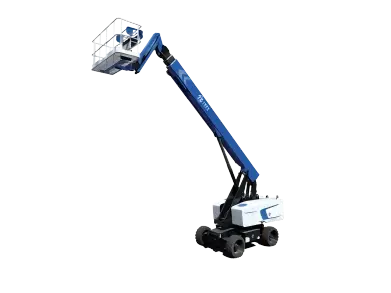
Telescopic boom lifts have a single arm that can be extended to different working heights using hydraulic systems. In contrast to flexible models that have multiple pivot points, these platforms stretch in a mostly straight path, which allows for the widest horizontal reach while keeping the steadiness of the platform. This design is very helpful when work areas are above ground-level obstacles like dig holes, waterways, or the thick networks of pipes that are common in petrochemical plants.
The engineering that went into making these machines strikes a balance between needs for reach and structural stability. Heavy-duty frame designs have counterweights and stabilisation technology built in so that the machine can still be used safely even when the platform is fully extended. Modern units have hydraulic controls that change how the system responds based on the weight of the platform. This makes sure that everything runs smoothly whether teams are using few tools or a lot of welding equipment.
Technical Specifications That Matter for Heavy-Duty Applications
The TZPZ22HEF-L type from TZCO is a good example of the specs that make professional-grade gear. This unit gives you the high access you need for work on multi-story buildings, bridge repair, and industrial facilities with a maximum working height of 24.6 meters and a platform height of 22.6 meters. Because most jobs that need to be done at height require both people and tools, the 454 kg safe working load can hold two workers and their tools.
The machine's general weight of 12,625 kg makes it more stable without making it harder to move. The length is 10.96 meters, the width is 2.49 meters, and the height is 2.69 meters. These measurements make it possible to move through normal industrial entry points while keeping the skeletal mass needed for safe operation. The 4WD2WS drive system makes it easy to move around on rough ground, which is a must for building sites that don't yet have smooth areas.
Power systems need to be thought about carefully. The 83.2V/375Ah battery setup of the TZPZ22HEF-L gives it the power needed for full-shift operation, cutting down on the break needed for midday charging. The 180L hydraulic oil tank makes sure that the system works the same way for long periods of time, keeping the pressure that is needed for accurate boom control and platform positioning.
Electric vs. Diesel: Matching Power Sources to Project Requirements
The power source you choose affects operating costs, how well it works with your place, and how well you follow the rules. Electric types are good for indoor use and work in cities where pollution control rules apply. These units don't make a lot of noise, so they can be used in places where people are or where noise is a problem. Thanks to improvements in battery technology, most single-shift apps can now run for a long time without needing to be charged between shifts.
Diesel-powered 22m straight boom lift units work best for heavy-duty tasks that need to be done outside, where their longer reach and continued use make up for their higher running costs. These machines can handle rough ground better and keep working even when the temperature drops, which can be bad for battery life. The final decision about which power source to use depends on the conditions of the spot, the length of the job, and the environmental rules in your area.
Operational Advantages and Industry-Specific Applications
Why Straight Boom Design Solves Complex Access Challenges?
When direct horizontal reach is more important than avoiding obstacles, the straight boom design is best. For example, when workers are inspecting and maintaining a bridge, they have to put platforms next to structural parts while the machine stays on the road or the inspection platform. The flexible design makes this possible without the need for complicated setting that hinged booms need.
Another clear benefit can be seen in shipyard uses. When workers need to get to hull sections or high rigging points, straight booms can be extended over the edges of the dry dock and the structure of the ship. They stay stable enough for jobs like welding, manufacturing, and surface preparation. The platform doesn't sway much when it's extended, which gives you a stable work area for precise jobs. This cuts down on work time and improves quality.
Here are the most important business perks that will help your bottom line:
- Direct Reach Efficiency: The flexible design gets rid of the need to change the setting that curved booms need. This cuts down on the time needed to set up work places and raises daily production measures.
- Better Platform Stability: A straight boom shape makes the platform move less than a multi-jointed one, giving you the stable work area you need for precise jobs like installing glass and connecting steel.
- Simplified Operator Training: The simple control logic (boom up, boom down, boom extend, boom retract) makes it easier for operators to learn, so crews can start using the equipment more quickly than with more complicated equipment.
- Less worry about tail swing: Straight booms do cause tail swing when they rotate, but the steady circle makes site planning easier than with flexible models, whose shapes change during complicated placement sequences.
These benefits directly improve project efficiency by increasing effective work time and lowering the need for placement changes during the workday. This lowers the hourly equipment costs.
Maintenance Practices That Maximize Equipment Longevity
Regular repair keeps your expensive equipment in good shape and stops the costly downtime that throws off project plans. Daily checks before use should confirm the amount of hydraulic fluid, look for obvious leaks, try the emergency controls, and make sure the tires are properly inflated. These checks only take minutes, but they save hours of work time that would have been lost if the tools had broken down.
For hydraulic systems, scheduled repair times are very important. Regular oil analysis finds pollution before it hurts the pumps and cylinders, and filter replacement keeps the system running smoothly. Load-sensing control systems need to be calibrated to make sure they work right across the whole working range, keeping safety and performance gaps.
When charging and maintaining battery-powered 22m straight boom lift units, you need to pay extra attention to how you do it. Following the manufacturer's instructions for charge cycles greatly increases the battery's useful life, lowering the repair costs that make up a big part of the cost of running an electric lift. Electrical resistance that hurts performance and poses safety risks can be avoided by keeping battery wires clean and connections tight.
Strategic Procurement: Ownership Models and Manufacturer Selection
Analyzing Total Cost of Ownership Across Acquisition Methods
Buying equipment involves more than just deciding how much it will cost. To find the total cost of ownership, you need to add up the rates of use, the costs of repairs and storing, and the prices of things that are no longer used. These things often show surprising differences between control models that aren't clear from just looking at prices.
Businesses that have steady, long-term needs that support capital investment should buy tools. When you own the tools, you don't have to pay rental fees, and you can use it whenever you want without having to worry about schedule issues that come up with renting. Initial costs are cancelled out by depreciation benefits and possible selling value, but these benefits need to be used enough to become real.
Rental deals meet the needs of a particular job and give you options when those needs change. Short-term rentals don't come with the upkeep and storage fees that come with owning a home, but long-term rentals can add up to more than the purchase price. The plan works well for workers whose work loads change often or whose clients' needs change with the seasons.
Leasing arrangements are a good middle ground because they spread costs out over set amounts of time and offer set treatments for leftover value. Operating loans keep assets off of balance sheets, which is good for businesses that care a lot about how their financial statements look. Finance rentals help build property while keeping payment options open, which is good for businesses that want to eventually own their own business.
Evaluating Manufacturers and Supply Chain Reliability
The choice of manufacturer affects how reliable the equipment is, how easy it is to get parts for, and how good the long-term help is. Western markets are dominated by well-known names like JLG, Genie, and Haulotte, which have large dealer networks and a lot of service infrastructure. These benefits are useful when something breaks down and quick arrival of replacement parts keeps downtime from lasting too long.
TZCO makes choices about buying based on its different skills. We were the first company in China to make heavy machinery when we opened in 1950, and we've since sent over 40,000 sets of equipment to projects in more than 70 countries. Our National Key Laboratory and several innovation platforms keep pushing technology forward, and our recognition as a Manufacturing Single Champion Enterprise shows that we are good at building specialised equipment.
When judging makers, you should look at these important factors in addition to the cost of the starting equipment:
- Availability of Technical Support: Quick response from technical support fixes operating problems, reducing the time and money lost on lengthy fixing during key project stages.
- Parts Supply Chain Depth: A large collection of extra parts and well-run supply networks decide how quickly broken parts are changed, which has a direct effect on your equipment's performance data.
- Understanding what guarantees cover—and more importantly, what they don't cover—avoids unpleasant repair costs during the coverage period and makes long-term ownership costs more clear.
- Service Network Proximity: Having local service makes it easier to fix problems and faster to plan upkeep, both of which have a big effect on how reliable equipment is over the life of the ownership contract.
These things help buying professionals find makers whose skills match their business goals beyond the initial purchase.
Emerging Technologies Reshaping Aerial Work Platform Capabilities
Innovation Trends Driving Next-Generation Equipment Design
As technology changes for the 22m straight boom lift, so do the possibilities of flying work platforms. IoT-enabled telematics systems can now watch equipment in real time, keeping track of how it is used, when it needs to be maintained, and how operators act in ways that affect safety and efficiency. This information lets repair methods plan ahead and stop problems before they happen instead of just fixing them when they do.
Multiple technologies are used in advanced safety systems to protect workers and people on the ground. Tilt sensors stop operation on hills that are too steep, and load tracking systems let workers know before the platform's capacity is reached. Some makers now use proximity sensing, which lowers the risk of accidents in crowded workplaces.
Electric motor technology keeps getting better, removing the range and power limits that used to limit battery-powered tools to light-duty tasks. Modern lithium battery systems offer the performance qualities that diesel engines used to be the only option for. This means that electric equipment can be used in more difficult situations where meeting pollution standards and lowering running costs make the higher cost of the technology worth it.
How Environmental Regulations Influence Equipment Selection?
Regulatory standards are becoming more and more important in deciding what tools to buy. California's strict pollution standards affect equipment specs all over the country because companies make goods that meet the strictest standards instead of keeping different model lines. Changes in foreign markets are similar to those happening in Europe with Stage V pollution.
These rules offer both possibilities and problems when it comes to following them. Electric equipment that used to be less powerful now has competitive features and doesn't produce fuel fumes, which is a big plus in covered or partially enclosed work spaces. Less expensive energy costs often make up for the higher cost of the technology at the beginning over the span of the equipment.
In the coming years, regulations will likely keep pushing building and manufacturing areas to use zero-emission tools. Early adoption puts businesses ahead of legal changes and lets them take advantage of the practical benefits that new technologies offer. Instead of responding to legal dates that cause fast equipment changes, procurement strategies should plan for these trends ahead of time.
Conclusion
22m straight boom lifts are important pieces of equipment for businesses that need to get to high places, like building, energy, manufacturing, and marine. For heavy-duty jobs, the 22m class strikes the best mix between reach, platform capacity, and site manoeuvrability. To do a good job of buying, you need to know about the technical standards, business needs, and control models that work with the project's budget. As improvements are made to electric power, data integration, and safety systems, platforms can do more. When choosing tools, it's important to think about both short-term project needs and long-term operating trends. Companies that buy flying platforms carefully, looking at things like total purchase costs, manufacturing capabilities, and technology trends, set themselves up for long-term competitive edge by increasing output and lowering running costs.
FAQ
What load capacity should I give for apps that use heavy tools?
How much a platform can hold depends on the size of the team and the weight of the tools. Standard setups can hold between 227 and 300 kg for one user, and 454 kg for two-person teams with dual-capacity rates. With its 454 kg weight limit, the TZPZ22HEF-L can hold two workers and their welding gear, air tools, or material stores. Always make sure that the total weight of the user, tools, and materials does not exceed the rated capacity. Overloading is dangerous and against the rules of the operation.
How do the factors of the surroundings affect the choice of equipment?
The operating setting has a direct effect on the choice of power source and the specs of the tools. Electric types are better for indoor use and cities with pollution control rules. Diesel power is often justified on outdoor building sites with rough ground and long reach needs, even though it costs more to run. Extreme temperatures can hurt the performance of batteries, so diesel is better for work in very hot or cold places. No matter what power source is used, operations can't go faster than 28 mph because of wind speed limits.
What kind of repair plan should I use for hydraulic systems?
The health of a hydraulic system affects how reliably it works. Every day before operation, check the fluid amounts and look for leaks. Replace hydraulic filters at the times recommended by the maker, which is usually every 500 to 1000 hours of use. Do a yearly oil study to find contamination early, before it causes damage to the parts. Due to its 180L hydraulic capacity, the TZPZ22HEF-L needs to be careful with its fluid quality. If the oil is dirty, it wears out pumps, cylinders, and control valves faster, which means more expensive repairs.
Partner With TZCO for Superior Aerial Access Solutions
The tools you need for your project needs to work well in a variety of tough working conditions. TZCO makes flexible boom lifts that are designed to work in the tough conditions found in building, energy, and industry. Our TZPZ22HEF-L 22m straight boom lift source has the reach, capacity, and dependability that you need to keep your projects moving forward without the costly downtime that comes with using bad equipment.
We know the practical problems your projects face because we are China's first company to make big tools and have over 70 years of technical experience. With the help of our National Key Laboratory and world-class clever production facilities, we make sure that every unit meets strict quality standards before it gets to your job site. We've sent more than 40,000 sets of tools to projects in more than 70 countries, which has given us the experience that helps us focus on our customers.
Email our team at tzcoglobal@tz.com.cn to talk about how our telescopic boom lift options can help you with your project. We offer in-depth expert advice, cheap purchasing terms, and quick help that keeps your equipment investment safe. You can see our whole line of overhead work platforms at tzcoglobal.com, and that's why leaders in your field trust TZCO for their high-level entry needs.
References
American National Standards Institute. (2018). ANSI/SAIA A92.20: Design, Calculations, Safety Requirements and Test Methods for Mobile Elevating Work Platforms.
Occupational Safety and Health Administration. (2020). Aerial Lifts Safety and Health Topics: Standards and Compliance Guidelines for Construction Industry.
International Powered Access Federation. (2019). Technical Guidance for Operators and Users of Mobile Elevating Work Platforms.
European Committee for Standardization. (2017). EN280: Mobile Elevating Work Platforms – Design Calculations, Stability Criteria, Construction, Safety, Examinations and Tests.
Construction Equipment Association. (2021). Total Cost of Ownership Analysis for Aerial Work Platforms: A Guide for Equipment Managers.
International Organization for Standardization. (2016). ISO 16368: Mobile Elevating Work Platforms – Design, Calculations, Safety Requirements and Test Methods for Suspended Equipment.